Introduction: Reading the Room in Between Colors
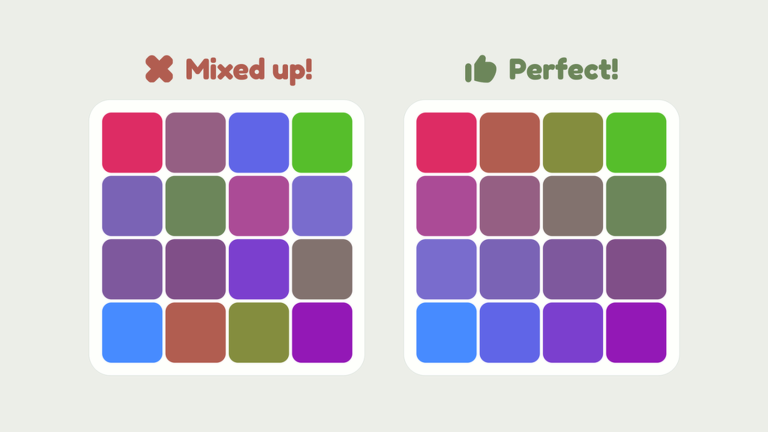
Between Colors is a Roblox puzzle game built around a simple but demanding idea: you get red, green, and blue sliders, a target shade, and you have to blend your way to a match. It is a quieter kind of Roblox title, closer to an art tool than a tycoon, and that shapes everything about its community. This review looks at Between Colors as it exists right now, through the lens of its social ecosystem: how players talk to each other, whether the game gives them tools to do it, how the economy behaves, and how well it treats someone who just walked in. It also revises the picture after the Neon theme update, which landed in May 2026 and gave the game its most visible burst of activity.
Discord and Social Media Activity Level
The developer is consistently active in the community and pushes quality-of-life updates, which is the single strongest signal that the social side of Between Colors is being maintained rather than abandoned. Activity spikes visibly around content drops. The Neon theme is the clearest example: a 20-level pack with glowing target shades and a timer, which gave players something concrete to post about, compare times on, and argue over. Between drops, the conversation is slower than in a combat or trading game, because the core loop is a solo concentration task. Expect steady, low-volume chatter about level tolerance, slider precision, and high-score runs rather than the constant hype cycle of an anime battler.
In-Game Social Features Quality
This is the weakest pillar, and it is worth being blunt about it. Between Colors is designed as a personal exercise in color perception, so the game gives you almost no native social surface. There is no meaningful way to show another player your blend, no shared canvas, no cooperative puzzle where two people split the sliders. The Neon theme partially compensates by reframing play as a competitive time trial with a high-score leaderboard, which creates a silent social loop: you see a time, you want to beat it, you come back. Leaderboards are social features even when nobody is talking, but they are a thin substitute for real interaction. If you want a game you can play and chat through, this is not it.
Trading Economy Health
There is no trading economy in Between Colors, and inventing one would misrepresent the game. Progression is self-contained. Gems function as the premium currency, earned through daily logins and achievements, and spent on exclusive cosmetics. That means the economy is a one-way sink rather than a player market: nothing passes between accounts, so there are no scammers, no price manipulators, and no inflation to worry about. The trade-off is that the earn rate is slow and the best items sit behind real money. There is no pay-to-win element, since every purchasable item is cosmetic, but the grind is steep enough that a free player will feel the gap. A healthy economy for whales, a stingy one for everyone else.
Toxicity and Moderation Issues
Because player interaction is minimal, toxicity has very little surface area to spread across. There is no PvP, no stealing, no griefable resource nodes, no kill feed. The main friction point is technical rather than social: the Neon theme carries a hit-detection bug that can flag a correct match as wrong, and it is especially infuriating under the timer. Occasional server lag during peak hours compounds it. Bug-related frustration is the toxicity substitute here, and it tends to be directed at the game rather than at other players. For anyone sensitive to competitive chat, that is a genuine point in Between Colors' favor.
Content Creator Ecosystem
The creator scene is small and specialized. Between Colors suits tutorial and challenge content better than streaming: color theory breakdowns, speed-run attempts on the Neon timer, and blind target challenges play well as short edited video. The free-play mode helps here, because it lets a creator demonstrate slider interactions without level pressure or failed attempts cluttering the take. Do not expect a large influencer pipeline, but do expect the occasional tidy, useful guide from a color-minded player.
Is the Community Welcoming to Newcomers?
Yes, and the game itself is the reason. The tutorial walks new players through color theory step by step with real-time visual feedback, so nobody arrives unprepared. Free-play lets you experiment with no penalty. The barrier is difficulty, not attitude: the tolerance tightens hard around level 30, where a handful of slider points decide success, and that is where newcomers tend to bounce. The community answer to this is to treat it as a practice tool first and a challenge second.
Code System and Rewards
Between Colors tracks a code system, but there are currently none to redeem. No rewards can be claimed yet for Between Colors. This page is monitored and updates the moment codes drop, and when new codes are released they will appear in the live list below. Codes in games like this typically arrive with content updates and events, then expire quickly, which is why an always-current list matters more than a memorized one.
FAQ
Q: Does Between Colors have any multiplayer or social modes?
A: Not really. The game is built as a solo blending exercise. The closest thing to a shared experience is the Neon theme high-score chase, where players compete against each other's times on a leaderboard rather than playing together directly.
Q: How does the Neon theme change the feel of the game?
A: It swaps standard targets for glowing neon shades, adds 20 levels, and puts a timer on your decisions. That shifts the game from a relaxed, patient puzzle into a speed challenge, which gives competitive players a reason to keep running levels for a better score.
Q: Is there anything to trade or buy from other players?
A: No. There is no player trading. Gems are earned through daily logins and achievements and spent on cosmetics only, so nothing affects gameplay performance and no player-to-player market exists.
Verdict
Between Colors is a focused, well-taught color puzzle with an honest free-play sandbox and one genuinely good competitive twist in the Neon theme. Its social ecosystem is thin by design: limited native interaction, no trading, a slow cosmetic economy, and a small creator scene. That is fine for players who want a calm, skill-based exercise with a leaderboard to chase, and disappointing for anyone looking for a community to hang out inside. The level 30 difficulty wall, the Neon hit-detection bug, and the steep gem grind are the real complaints. Play it if you want precision and a timer to beat. Skip it if you want people to play with.
Active Between Colors Codes (November 2026)
No verified active codes are available right now for Between Colors.