Why the Kill Counter Decides Everything
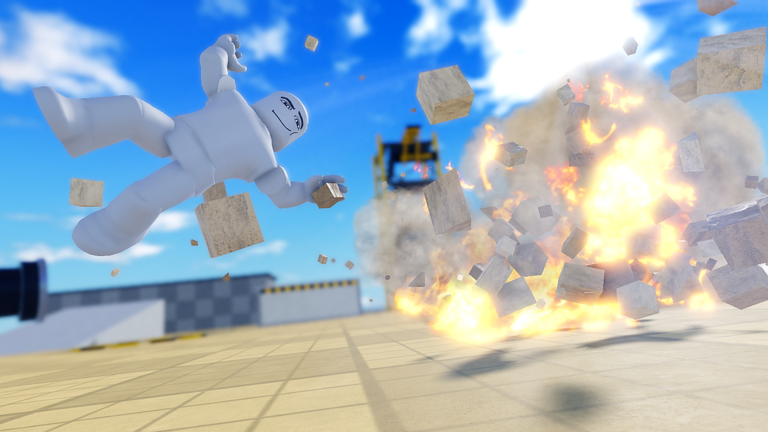
Bloody Ragdoll Physics is a single-player Roblox sandbox where every dummy is a real physics body: hit it, throw it, blow it up, and it stumbles, begs, fights back, and falls the way it was hit, with limbs coming off so that no two falls look the same. The official Roblox description lists 23 weapons, from sniper and shotgun to chainsaw, sledgehammer, flamethrower, minigun, rocket launcher, gravity gun and a black hole, plus 14 syringes. The catch is that your arsenal is not handed to you at spawn. As creator CHALLS shows in a November 11, 2026 weapon guide, kills are the gate: you need more kills to unlock more weapons, and at one point in the video the counter reads six more kills before the next unlock appears.
That single rule shapes every decision in the game, and it is exactly where solo players and players who tackle the sandbox alongside friends end up doing completely different things.
Solo Play Versus Playing With Friends: Two Different Economies
Because Bloody Ragdoll Physics is a single-player experience, a group session is really a race on the same kill economy. Playing alone, your time goes entirely into throughput: how fast you can drop a dummy, revive it, and drop it again. Playing in a group, your time splits between throughput and discovery, because friends cover the map and the weapon list faster than one person can, and they can call out which unlocks they have already tested.
The other difference is risk. Solo, you control the environment completely, including the caged giant that CHALLS watches slam against its cage and threatens to break out. In a group, that same giant becomes a shared problem: if the cage fails while several of you are clustered around it, your kill farming session turns into a survival session.
Best Strategies When Playing Alone
- Reset on purpose. CHALLS resets the session mid-run to refresh the dummies, then immediately resumes killing. Treat reset as part of your farming loop rather than a failure state.
- Revive as you farm. After each kill, revive the ragdoll so the next weapon unlock attempt starts with a fresh target instead of a pile of settled limbs.
- Stagger your weapon tests. Cycle through the sniper, shotgun and flamethrower on one dummy, then switch to the chainsaw or sledgehammer on the next. Limbs come off differently per weapon, so testing one tool at a time tells you what each unlock actually does.
- Use the black hole and gravity gun for crowd clear. When several dummies cluster, these two pull the group together so a single rocket launcher or minigun burst converts into multiple kills at once.
- Work the 14 syringes as a separate experiment track. They are their own category of 14 items, so test them between kill batches instead of during them, when they interrupt your counting rhythm.
- Let settled bodies rest. Physics bodies stay active for a short window after a fall, then settle. Hitting an already settled dummy wastes a swing that could have gone toward a live, moving target.
How to Adapt When Playing Alongside Others
Turn the kill economy into a split. One player focuses on raw kills to push weapon unlocks, while another runs the periphery: testing which dummies beg or fight back before dying, checking how the cage holds, and logging which of the 23 weapons each of you already owns. When a new unlock lands, trade the finding immediately instead of both of you discovering it ten minutes apart.
Group sessions also change your weapon choice order. Weapons that produce one kill at a time, like the sniper, become less efficient when two people are already generating kills, so hand the sniper to whoever is doing precision work and give the flamethrower or minigun to the player handling dense clusters.
Role Suggestions for a Shared Session
- Farm lead: owns the kill counter, uses reset and revive cycles, and reports unlock progress.
- Physics scout: experiments with throws, falls from elevation, and limb removal to map how each of the 14 syringes and the heavier melee tools behave.
- Hazard watch: monitors the cage and the giant so the group is never surprised mid-farm.
When to Switch Approaches
Switch from tight farming to open experimentation the moment a new weapon unlock lands. That is the only point where information beats raw kills, because you need to know whether the new tool replaces your flamethrower or complements it. Switch back to solo-style farming the moment the counter shows you are close to the next unlock threshold, since splitting attention there directly slows your progress.
Q: How do I unlock more weapons in Bloody Ragdoll Physics?
Weapons unlock through kills. CHALLS's guide demonstrates the loop clearly: farm kills on the dummies, reset the session when targets dry up, revive them, and check your weapon list again. At one point the guide shows exactly six more kills needed before the next unlock appeared.
Q: What weapons and items are actually in the game?
The game lists 23 weapons, including sniper, shotgun, chainsaw, sledgehammer, flamethrower, minigun, rocket launcher, gravity gun and a black hole, alongside 14 syringes that function as their own item category.
Q: Do the dummies just stand still and take hits?
No. Every dummy is a real physics body that stumbles, begs, fights back, and falls the way it was hit, and limbs come off so no two falls look the same. There is also a caged giant that can threaten to break its cage mid-session.
Conclusion
Bloody Ragdoll Physics rewards one thing above all: kills. Whether you farm them alone with disciplined reset and revive cycles or split the work across a group that covers hazards, syringes and weapon discovery at the same time, the players who progress fastest are the ones who treat the kill counter as the core system of the sandbox and everything else, from the gravity gun to the caged giant, as support around it.
Active Bloody Ragdoll Physics Codes (November 2026)
No verified active codes yet for Bloody Ragdoll Physics; 30 unverified codes are being tracked.