Flying in Can You Land A Plane works completely differently when you are alone versus when you have a crew covering the cabin. The plane hands you the throttle, pitch, flaps, gear, and camera as separate inputs, and every one of them decides whether you bounce down the runway or stick the landing. This guide breaks down the solo versus squad split, with concrete mechanics from the game: approach speed, glide path, flare timing, runway alignment, go-arounds, the Student Pilot license ladder, and the job list that pays your cash.
Solo versus squad: why the two approaches diverge
The single biggest difference is who owns the workload. Flying solo means your hands never leave the controls: you are managing throttle and pitch while also watching the glide path and lining up with the runway. In a group, that attention can be split, but only if the crew agrees on who touches what.
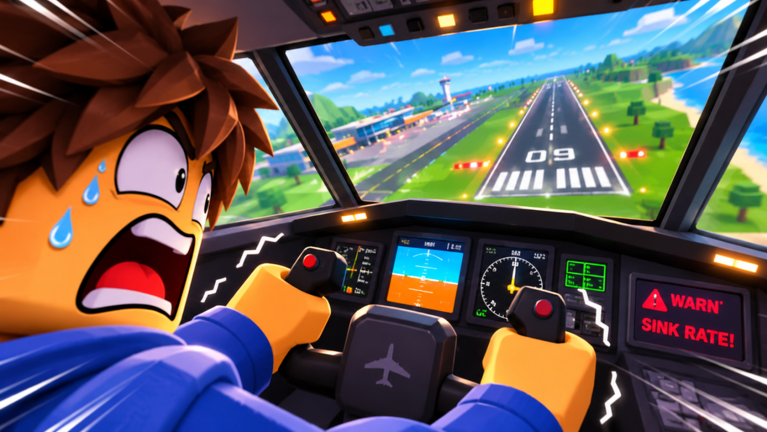
The Can You Land A Plane wiki puts it plainly: dial in approach speed, glide path, flare, and runway alignment so you stop bouncing and crashing. Solo pilots have to hold all four in their head at once. Squad pilots can dedicate one person to the approach while another handles cabin problems, which is the same division of labor that experienced Roblox flight crews use, where one player flies, one handles repairs, and one looks after passengers.
Best strategies when you play alone
Lock your controls before you climb in
Can You Land A Plane maps throttle, pitch, flaps, gear, and camera separately for both PC and mobile. Before your first serious flight, open the controls page and bind them so landings feel identical every session. A flaps key you have to hunt for will ruin your flare timing on final approach.
Fly the approach, not the runway
Set your approach speed and glide path early instead of correcting at the last second. Once you are on the flare, the goal is a smooth touchdown followed by runway alignment so the aircraft does not drift or bounce. If the alignment is off or the weather turns hard, take the go-around. Burning fuel for a second attempt costs far less than a wrecked landing.
Study before you commit
The wiki is explicit: study the how to land guide before tougher weather and harder airports. As a solo pilot you have no backup, so treat each new weather condition as its own briefing rather than learning it mid-air.
Convert clean landings into licenses and jobs
Landing the jet earns you Student Pilot I. From there you pass flight tests to climb the ladder: Student Pilot I and II, Private, Commercial, Ace, and finally ATP, collecting badges along the way. Higher licenses unlock better planes, and better planes make the next solo landing easier. Spend your flying jobs for cash between test runs instead of grinding flights you are not ready for.
How to adapt when you bring a group
In a squad the priority flips from total control to clean handoffs. Agree before takeoff who calls the flare and who calls go-arounds, otherwise two people will fight the pitch at the worst moment. Assign one player to monitor approach speed and glide path numbers while the pilot focuses on throttle and gear. Keep the controls page open as shared reference so PC and mobile players are speaking the same language.
Groups also have an advantage in job variety. The job list in Can You Land A Plane covers cargo, passengers, dusting, and rescues, and these stack with VIP and 2x Cash bonuses. A squad can cycle through job types while a solo pilot usually sticks to the one route they know best.
Role suggestions for team play
- Pilot: Owns throttle, pitch, flaps, and gear. Calls the flare and the final runway alignment.
- Approach spotter: Reads approach speed and glide path, calls go-around the moment alignment drifts.
- Cabin lead: Handles passenger duties and job objectives so the pilot never leaves the controls.
When to switch approaches
Switch from squad to solo when the test flight is short and you need unbroken focus on flare timing, such as a license exam. Switch from solo to squad when the job stacks cargo or passenger duties on top of a landing in rough weather, since cabin tasks will otherwise pull you off the glide path. If you are new, community flight guides for Roblox plane games recommend a sandbox session first to get comfortable with takeoff, cruise, and landing before a long run, and that advice transfers cleanly to Can You Land A Plane's practice loops.
FAQ
Q: What licenses do you climb in Can You Land A Plane after earning Student Pilot I?
You move from Student Pilot I and II through Private, Commercial, Ace, and ATP, collecting badges as you pass flight tests, with better planes unlocking as you go.
Q: Which jobs pay cash in Can You Land A Plane?
The job list includes cargo, passengers, dusting, and rescues, and those payouts stack with VIP and 2x Cash bonuses.
Q: What should I tune before landing on mobile in Can You Land A Plane?
Map throttle, pitch, flaps, gear, and camera inputs on the controls page so your landings feel consistent across PC and mobile.
Conclusion
Solo flying in Can You Land A Plane rewards tight control of approach speed, glide path, flare, and runway alignment. Squad flying rewards clear roles and clean handoffs so nobody steals the pitch during touchdown. Pick the approach that matches the job in front of you, climb your licenses on the side, and you will stick far more landings in November 2026.
Active Can You Land A Plane? Codes (November 2026)
1 verified code available for Can You Land A Plane?; 9 unverified codes are being tracked.