Introduction to Advanced Cluck or Hide Tactics
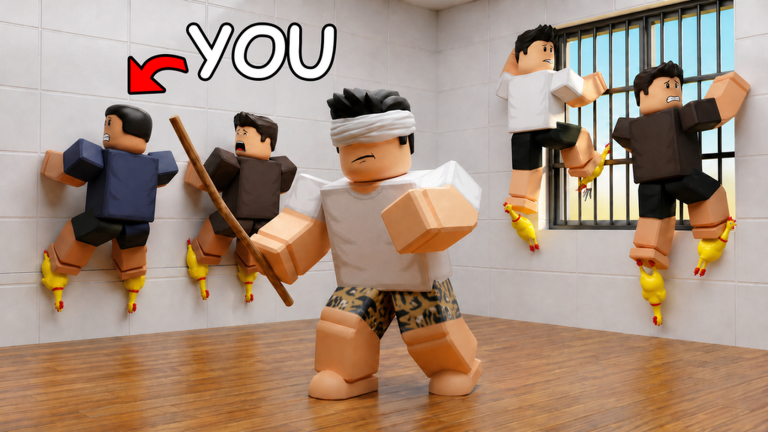
Welcome, aspiring masters of Cluck or Hide! This popular Roblox game challenges players to either blend seamlessly into the environment as a Hider or relentlessly hunt down disguised opponents as the Killer. While the basic premise of 'move to be revealed, stay still to be hidden' is straightforward, true mastery lies in understanding the subtle mechanics and psychological warfare that elevate your gameplay. This guide delves into the hidden systems and lesser-known interactions that can turn a good player into an unstoppable force, whether you're clucking with fear or hunting with precision.
Moving beyond simple hiding spots and frantic chases, we'll explore how to leverage prop characteristics, environmental cues, and calculated movements to gain a significant edge. Prepare to refine your instincts and transform your approach to every round of Cluck or Hide.
Hidden Systems & Lesser-Known Interactions: The Nuances of Visibility
For Hiders: The Art of Subtlety
The core rule for Hiders in Cluck or Hide is simple: moving reveals you, staying still keeps you hidden. However, this seemingly binary mechanic holds deeper layers for those who seek to exploit them.
- The Art of Momentary Repositioning: While any movement instantly reveals a hider, skilled players can utilize extremely brief, calculated micro-movements to adjust their prop's angle or shift slightly behind cover when the Killer is distant or momentarily distracted. This isn't about avoiding revelation entirely, but minimizing its duration and visibility to the Killer. It's a high-risk, high-reward tactic that requires precise timing and map awareness.
- Prop Hitboxes and Visual Blending: Not all props are created equal. Different props possess varying hitboxes and visual profiles. Some props might allow for tighter fits into crevices or visually blend more seamlessly with environmental textures, making them harder to distinguish even when stationary. Experimenting with various prop sizes and shapes in different environments can reveal optimal choices for specific maps.
- Exploiting Environmental Cues: Beyond simply being still, advanced Hiders observe the map for dynamic elements. These could include flickering lights, moving objects in the environment (like swaying trees or rotating fans), or even other players' movements. These dynamic elements can subtly mask your own momentary repositioning or draw the Killer's attention away from your static prop, providing a crucial distraction.
For Killers: Detecting the Undetectable
As the Killer, your objective is to hunt moving players and eliminate them all. But against cunning Hiders, you need to go beyond just spotting obvious movement.
- Aural and Visual Anomaly Detection: Train your senses to pick up on faint sounds of props shifting or subtle visual 'pops' or glitches that occur when a Hider attempts a quick reposition. These minute anomalies are often the only giveaways for a skilled Hider attempting to adjust.
- The 'Contextual Anomaly' Scan: Instead of just looking for moving props, experienced Killers perform a 'contextual anomaly' scan. This involves actively looking for props that are out of place, too perfectly aligned in an unusual spot, or appear in locations where they logically shouldn't be. For instance, a small trash can in the middle of a pristine living room or a stack of crates in a bathroom are immediate red flags. This requires strong map knowledge and an eye for detail.
- Predictive Pathing: Observe common hiding patterns and anticipate where Hiders might try to reposition. Certain areas offer better cover or escape routes, making them prime targets for Hiders attempting to shift.
Why These Nuances Matter: Beyond Basic Survival
Understanding and applying these advanced tactics fundamentally changes the game for both roles.
- For Hiders: Mastering momentary repositioning and prop blending significantly increases your survival rate. It allows for more dynamic hiding, enabling you to adapt to the Killer's patrol patterns rather than being stuck in a single, potentially compromised spot. This also creates psychological pressure on the Killer, forcing them to second-guess every prop.
- For Killers: Developing an eye for contextual anomalies and subtle movements drastically reduces your search time and improves your accuracy. By understanding how advanced Hiders operate, you can prevent them from escaping easily and systematically clear areas with greater efficiency, leading to more consistent victories.
How to Utilize These Advanced Tactics
For Hiders: Becoming a Master of Disguise
- Strategic Repositioning: When the Killer is far away or momentarily looking in another direction, use tiny, quick movements to shift into a better hiding spot or adjust your prop's angle for better concealment. Practice the 'Momentary Repositioning' technique in less intense rounds to get a feel for the timing and minimal movement required to avoid prolonged revelation.
- Prop Selection and Placement: Prioritize props that naturally blend into the environment. If forced to be a large prop, find a corner or a cluster of similar objects to minimize your profile. Always consider the scale and context of the prop within its surroundings. A small plant in a garden is far less suspicious than a large wardrobe in a small bathroom.
- Observational Hiding: Don't just hide and wait. Actively observe the Killer's patrol patterns and tendencies. Anticipate their routes and adjust your hiding spot or prop choice accordingly. If a Killer consistently checks a certain area, consider moving to a less obvious spot before they arrive.
For Killers: The Art of the Hunt
- Systematic Sweeps: Avoid random searching. Divide the map into manageable sections and methodically check each area. Pay close attention to prop clusters, corners, and any unusual placements. A systematic approach ensures you don't miss subtle clues.
- The 'Double Take' Strategy: Quickly glance at an area, move on slightly, then immediately turn back. Hiders who thought they were safe might have moved during your initial pass, and this quick 'double take' can catch them in the act of repositioning.
- Exploiting Line of Sight: Use your speed and perspective to quickly check angles and corners that Hiders might think are safe. Often, a quick peek around a wall or over an object can reveal a poorly placed prop or a Hider attempting a risky move.
Common Mistakes to Avoid
Hiders' Pitfalls
- Over-reliance on a single spot: Even the best hiding spot becomes predictable if you use it every round. Vary your locations to keep Killers guessing.
- Moving too much or too obviously: This is the most common mistake. Remember, any movement reveals you. Only move when absolutely necessary and with extreme caution.
- Choosing an obvious prop: Selecting a prop that clearly doesn't belong in its environment is a rookie error. A giant refrigerator in a small bedroom is an instant giveaway.
Killers' Blunders
- Random searching: Aimlessly wandering the map is inefficient and allows skilled Hiders to survive longer. Adopt a methodical approach.
- Ignoring peripheral vision: Focusing solely on what's directly in front of you can lead to missing subtle movements or out-of-place props in your peripheral view.
- Tunnel vision: Focusing on one area for too long allows other Hiders to reposition or remain undetected elsewhere on the map. Keep your search dynamic.
Frequently Asked Questions
Q: How can I tell if a prop is a hider in Cluck or Hide?
A: Look for props that are out of place, too perfectly aligned, or in locations where they logically shouldn't be. Also, pay close attention to any subtle visual glitches or faint sounds that might occur if a Hider attempts to reposition. A quick 'double take' can also catch a Hider who moved after your initial glance.
Q: What are the best types of props to choose as a hider?
A: The best props are those that blend naturally with the environment and have a smaller visual footprint. Small, common objects like plants, boxes, or chairs that can be placed amongst similar items are often effective. Avoid props that stand out due to their size, color, or incongruous placement.
Q: Is it ever safe to move as a hider in Cluck or Hide?
A: Moving as a hider is inherently risky as it instantly reveals you. However, it can be done strategically. It's 'safest' to move when the Killer is far away, completely out of sight, or demonstrably distracted by another area or Hider. Even then, movements should be extremely brief and calculated to minimize exposure.
Conclusion
Cluck or Hide is more than just a simple game of hide-and-seek; it's a test of observation, cunning, and strategic thinking. By delving into the nuances of visibility, mastering momentary repositioning, and developing an acute awareness of environmental cues, both Hiders and Killers can significantly elevate their gameplay. Remember, the most effective strategies often lie in the subtle details and the ability to anticipate your opponent's next move. Apply these advanced tips, avoid common mistakes, and you'll soon find yourself dominating every round of Cluck or Hide, proving that true mastery comes from understanding what lies beneath the surface.
This article was compiled by the RoUniverse automation pipeline in May 2026 using publicly available sources and is kept up to date as new information becomes available.
Active Cluck or Hide Codes (May 2026)
0 verified codes available for Cluck or Hide · 24 unverified
This article was researched and generated using AI tools, then reviewed by the RoUniverse editorial team.