Why Your Upgrade Loadout Decides Every Escape
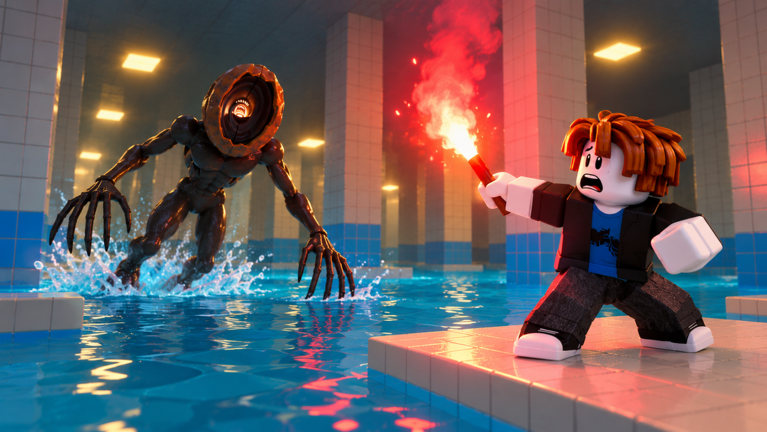
DONT SPLASH is a horror platformer on Roblox inspired by the atmosphere of Poolrooms and House of the Locust. Your only goal is to move from room to room to reach the exit by jumping across different kinds of bridges, but every room is filled with water, and any splash pulls a hyperactive monster straight to your position. Because the creature hunts by sound rather than sight, your entire strategy is really a loadout question: which upgrades let you distract it, and which let you actually survive the crossing.
The game ships with six upgrades that reshape your distraction toolkit. Picking the wrong combination for your playstyle is the single fastest way to lose a run, so this guide compares them and maps each build to the situations it shines in.
The Six Upgrades Compared
Sportskeeda's beginner's guide lists the full upgrade roster:
- Throwing Range: Pebbles and bottles fly farther.
- Pebble Skipping: Pebbles make more splashes before sinking.
- Toy Battery: The wind-up toy runs longer.
- Flare Radius: Flares reach further and stay out for more duration.
- Rope Reach: The rope's reach is increased.
- Rescue Speed: Rescuing teammates is quicker.
Read closely and a pattern appears. The first four upgrades all extend or multiply splashes, which means they bait the monster. The last two only matter in multiplayer, because they exist to save friends you have already reached. That split is the backbone of every good loadout decision.
Loadout One: The Solo Distraction Build
The guide explicitly recommends prioritizing Throwing Range and Pebble Skipping for solo playthroughs, and the reasoning is solid. When you play solo, nobody is reviving you, so your only defense is pulling the monster away from the bridge you currently need. Throwing Range lets you plant a splash decoy on the far side of a room while you hold position on a narrow ledge. Pebble Skipping turns a single stone into a chain of splashes, so one throw keeps the creature locked onto a false target long enough for you to clear a full jump set.
Stack these two with the wind-up toy. TonyCool's walkthrough shows players grabbing fresh pebbles mid-run before tackling the next stage, and a toy that runs longer buys the same breathing room without consuming your stone supply. Use the toy when you need the monster occupied while you line up long jumps on wide platforms, and save pebbles for the tight moments.
Loadout Two: The Co-op Rescue Build
When you play with friends, which TonyCool confirms is fully supported alongside solo, flip the priority. Rescue Speed and Rope Reach become your strongest picks, because a downed teammate is a louder problem than any splash decoy. A quick revive keeps your group moving through the flooded rooms together, and the extended rope lets you pull someone back from the waterline without stepping into danger yourself.
Pair that with Flare Radius. Flares reach further and stay lit longer, giving a whole squad a shared distraction that multiple players can exploit at once. One teammate throws a flare, the monster commits, and the rest of the group crosses on bridges the monster is no longer patrolling.
Stage Awareness: Narrow Ledges vs Wide Platforms
Loadouts only work if you read the terrain. TonyCool stresses that every single stage is different, and the two patterns he calls out are narrow ledges with short jumps and wide platforms with long jumps. On narrow ledges, minimize movement and never test a jump until you have a distraction already active, because a splash there leaves you nowhere to run. On wide platforms, commit to the long jump quickly while your flare or toy holds the monster away from your landing zone.
Switch to third person, which TonyCool recommends, so you can judge the gap before you leap rather than after you are airborne.
Game-Specific Examples in Action
Solo in Normal Mode: collect fresh pebbles before each stage, throw one past your intended route, then cross while Pebble Skipping chains the splash. Co-op in a flood room: activate the wind-up toy, send a Rescue Speed teammate forward to pull back anyone who slips, and cross behind the flare.
Frequently Asked Questions
Q: What does the creature in DONT SPLASH actually track?
The creature cannot see players but it can hear the splashes they make in the water, according to community coverage on TikTok. That is why quiet movement and decoy splashes are the core of every strategy.
Q: Which upgrades should a brand new solo player buy first?
Throwing Range and Pebble Skipping. Both multiply the splash decoys you rely on when no teammates are around, and they work in every room of the game.
Q: Can I play DONT SPLASH with friends instead of solo?
Yes. TonyCool's guide demonstrates both solo and co-op play, and the Rope Reach and Rescue Speed upgrades only have value in team runs, so they are the clear signal that multiplayer is an intended path.
Final Thoughts
DONT SPLASH rewards preparation more than reflexes. Build the solo distraction loadout of Throwing Range plus Pebble Skipping for clean solo escapes, or swap to Rope Reach, Rescue Speed, and Flare Radius when you run with friends. Pair either loadout with a stage read of narrow ledges versus wide platforms, and you will spend far more time reaching exits than watching the monster close in.
Active DONT SPLASH Codes (October 2026)
No verified active codes are available right now for DONT SPLASH.