Drive a Cart Downhill!: Inside the Ghosttown Community (November 2026)
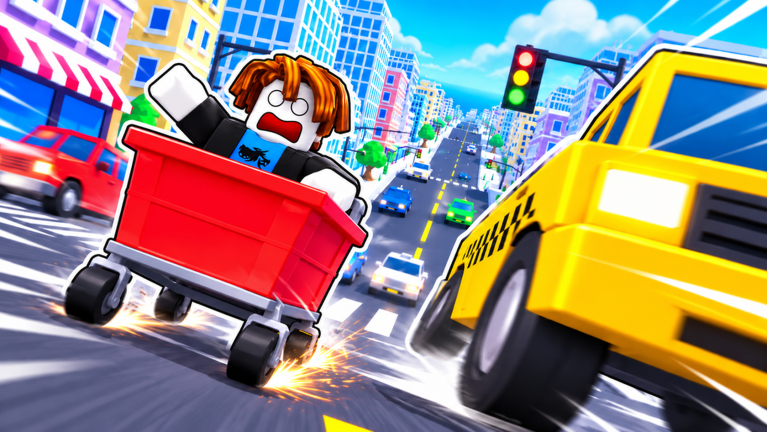
Drive a Cart Downhill! is a Roblox physics sandbox where the whole point is beautifully simple: spawn a vehicle, point it downhill, and let suspension, ramps, landmines, and other drivers decide whether you bank cash or scatter parts across Ghosttown. The fan-run wiki describes it as a North Nevada playground where money comes from distance, destruction, and style, then gets spent on faster and stranger vehicles. This review sets aside raw gameplay and looks at the thing that keeps a sandbox alive: the people around it. How loud is the community, how healthy is the social layer, and is Ghosttown a friendly place to crash into for the first time?
Discord and Social Media Activity Level
Grounded sources point to a community that is active but decentralized. The unofficial Drive Cars Down A Hill Wiki is the clearest signal of organized fan effort, running beginner guides, cash farm walkthroughs, vehicle tier pages, and crash physics tips, with a documented play session count above 177 million and peak players near 9.7 thousand on a 25 player server size. That wiki explicitly states it is fan-made and directs players to confirm patches and bans through official links, which suggests community energy is real but not yet consolidated under a single official hub. On video platforms, a full beginner guide from the channel VendoPlus went up on October 28, 2026, and Medal.tv hosts a dedicated clip feed where players post Halloween-flavored runs. There is content flowing, but it is clip-first and guide-second rather than a sprawling news machine.
In-Game Social Features Quality
The social experience here is emergent rather than menu-driven. Servers hold up to 25 players, and the Medal.tv description frames the loop in social terms directly: race your friends, survive the obstacles, and see how fast you can make it through the city. Nothing in the research points to lobbies, party menus, or friend quests. The interaction is the crash itself, watching another driver eat a landmine while you thread a tunnel. That is lightweight social design, and it works, but players who want structured co-op will not find it.
Trading Economy Health
There is no player-to-player trading in the systems described. The economy is single-player cash with developer-set vehicle prices: you earn from distance, destruction, and style, then buy machines ranging from the free Jalopy 2106 up to weekly trucks that tow boats or sell slushees. Community value sits in the knowledge economy instead, with the wiki cataloguing cash farms such as the Depot route that pushes earnings toward roughly 100k before a reset. Because prices are fixed and cash is earned, nobody can price-gate you out of a vehicle, which keeps the sandbox honest.
Toxicity and Moderation
No documented toxicity wave or ban controversy appears in the reviewed sources. The wiki's own advice to verify bans through official channels is standard caution rather than evidence of a moderation problem. With 25 player servers and a purely physics-driven competitive surface, friction is mostly mechanical, not verbal. That said, moderation transparency is thin: there is no visible public record of enforcement actions, so trust here rests on the developer's own links page.
Content Creator Ecosystem
This is the strongest part of the social picture. Medal.tv runs a live clip page with controller, keyboard, and mobile control breakdowns attached, and creators push likes and favorites as a signal for new carts, courses, and features. VendoPlus's full guide covers first-person toggling with the C key, tunnel routing, braking with S, hopping with Space, and the garage return loop. The creator base is small and tutorial-focused, which is exactly what a physics sandbox needs in its growth phase.
Is the Community Welcoming to Newcomers?
Yes, unusually so. The onboarding path is well lit: the wiki offers a getting started guide, the Medal page prints full control lists for PC, mobile, and controller, and the free Jalopy 2106 means nobody starts locked out. The loop is forgiving by design, since every run is just another chance to go faster. Code support is the one gap in onboarding: there are currently none to redeem, and no rewards can be claimed yet for Drive a Cart Downhill!. This page is monitored and updates the moment codes drop, and when new codes are released they will appear in the live list below.
FAQ
Q: Does Drive a Cart Downhill! have codes to redeem right now?
There are currently none to redeem. No rewards can be claimed yet for Drive a Cart Downhill!. This page is monitored and updates the moment codes drop, and when new codes are released they will appear in the live list below.
Q: Can I trade vehicles or cash with other players in Drive a Cart Downhill!?
No player-to-player trading appears in the current systems. Cash is earned from distance, destruction, and style, then spent on vehicles at fixed developer prices, starting with the free Jalopy 2106.
Q: What controls does Drive a Cart Downhill! support across platforms?
PC uses A and D to steer, S to brake, and Space to hop, with brake plus steer for sharp turns. Mobile offers left and right steering, a brake button, and a jump button, while controller players use the left stick, left trigger, and A or Cross.
Verdict
Drive a Cart Downhill! is at its best as a casual physics playground with a compact, helpful creator scene and a fan wiki carrying real weight. Progression is shallow but honest: cash comes in from risky runs, vehicle prices are fixed, and the Jalopy 2106 keeps entry free. Monetization pressure is low because nothing in the reviewed systems gates speed behind spending, and the code layer is dormant for now. Skip it if you want trading systems, structured co-op, or a loud official Discord presence. Play it if you want to point a slushee truck at a landmine, flip in Ghosttown, and immediately hit the garage for another run.
Active Drive a Cart Downhill! Codes (November 2026)
No verified active codes are available right now for Drive a Cart Downhill!.