Why your animal changes the whole plan
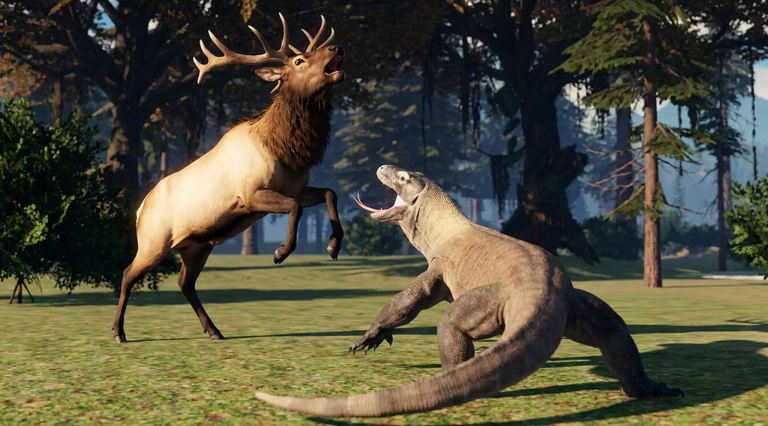
FERAL 🐺 Animal Survival drops you into Elasmonian Games' Roblox survival valley as a baby wolf or a baby deer, and that single choice in the create flow shapes every minute that follows. The wolf is the hunter starter, the deer is the herbivore starter, and every species begins from a baby model before growth takes over. Whether you play alone or with friends, the two systems that decide your session are the GROWTH meter and Amber, the currency that quests and new-area discoveries pay out.
This guide breaks down how the same loop plays differently solo and in a group, and how to read the HUD signals that tell you exactly how much you still need for the next animal or growth stage.
Solo play versus group play: the real differences
Playing alone means the GROWTH meter is fed only by your own feeding and drinking. Nothing is shared, nothing is covered for you, and a missed drink stalls your own progress bar. In a group, the pressure shifts: you spend time waiting on teammates, but you also gain safety while eating, because a lone baby deer at a water source is an easy target for anything hunting nearby.
The second difference is Amber. Solo players chase quests and new-area discoveries one at a time, and every discovery pays individually. Group players split attention across shared objectives, so the HUD readout for how much you still need for the next animal becomes the fastest way to know whether your current route is actually paying.
Best strategies when you play alone
- Track the percentage breakpoints. On a recorded wolf run, teen stage and the LUNGE ability arrived at 34 percent GROWTH, and adult arrived at 67 percent, with elder following adult. Treat 34 percent as your first power spike: before it you are a baby model with no lunge, after it you can actually chase food instead of just scavenging it.
- Feed the meter before the map, not after. Eating and drinking are what raise GROWTH, so a solo route that ignores water in favor of sprinting to a new area wastes both growth time and the Amber a fresh discovery would have paid.
- Read the HUD instead of guessing. The interface shows how much you still need for the next animal or growth stage. When the number is small, finish the current food loop; when it is large, move to a new area to trigger a discovery payment.
- Pick your starter to match your solo style. The wolf gives you the hunter path and the eventual LUNGE, while the deer locks you into herbivore feeding. Solo deer players must plan water and plant routes more strictly because they cannot lunge for meat.
How to adapt when you are in a group
Group play turns GROWTH into a scheduling problem. Since each animal's meter only moves from that animal's own eating and drinking, a squad that rushes from area to area can leave younger members stuck below 34 percent while adults race ahead. The fix is to treat every new-area discovery as a group stop: let the payment land for everyone, then resume the route.
In squads, prioritize the shared readout on the HUD over individual instinct. If several members are close to a stage threshold, hold the group at a safe food and water spot until those bars fill, then push the next area together. This is also when the November 2026 roster matters, because the abilities listed for each species decide who can defend the feeding group.
Role suggestions for team play
- Wolf hunters take the front line, using LUNGE once they cross 34 percent GROWTH to secure meat for the group and keep pressure off feeders.
- Deer herbivores run the food and water rotation, since their growth comes entirely from plants and drinking rather than hunting.
- Stage leaders are anyone already at adult or elder. Their job is area scouting and discovery triggers, because they have the least left to gain from standing still at a water hole.
- Late babies stay near the group and focus purely on eating and drinking until the HUD shows their next threshold within reach.
When to switch approaches
Switch from group to solo when your personal GROWTH readout shows a threshold close enough that a short independent food loop finishes it faster than waiting for the squad. Switch back to group the moment you approach a new area, since discovery Amber is one of the cleanest payouts the game gives and it is better triggered with backup. Also switch to solo hunting after hitting the 34 percent LUNGE spike on a wolf, because at that stage you finally have the tool to feed yourself without help.
Conversely, drop back to cautious group feeding if you are a deer: without LUNGE, isolation at a water source is the fastest way to lose progress you spent the whole session building.
FAQ
Q: What animal do I start as in FERAL Animal Survival?
You begin as a baby wolf or a baby deer. The wolf is the hunter starter and the deer is the herbivore starter, and you name the animal in the create flow before it loads as a baby model in the valley.
Q: When do the teen, LUNGE, adult and elder stages unlock?
Eating and drinking raise the GROWTH meter. On a recorded wolf run, teen stage and LUNGE arrived at 34 percent and adult at 67 percent, with elder after adult. Those figures were measured on the wolf and were not published as a universal chart for every species.
Q: How do I get Amber efficiently?
Amber is the currency that quests and new-area discoveries pay. The HUD also shows how much you still need for the next animal, so pair quest runs with new-area pushes and check that readout before committing to a long route.
Conclusion
Solo play in FERAL Animal Survival is about feeding your own GROWTH meter on schedule and cashing discovery Amber yourself, while group play is about timing those same bars so nobody gets left below the 34 percent LUNGE spike or the 67 percent adult mark. Pick your starter for the play style you actually use, watch the HUD threshold numbers instead of guessing, and flip between lone food loops and squad area pushes whenever the numbers say it is time. That rhythm, not raw playtime, is what turns a baby wolf or deer into an elder.
Active FERAL 🐺 Animal Survival Codes (November 2026)
No verified active codes are available right now for FERAL 🐺 Animal Survival.