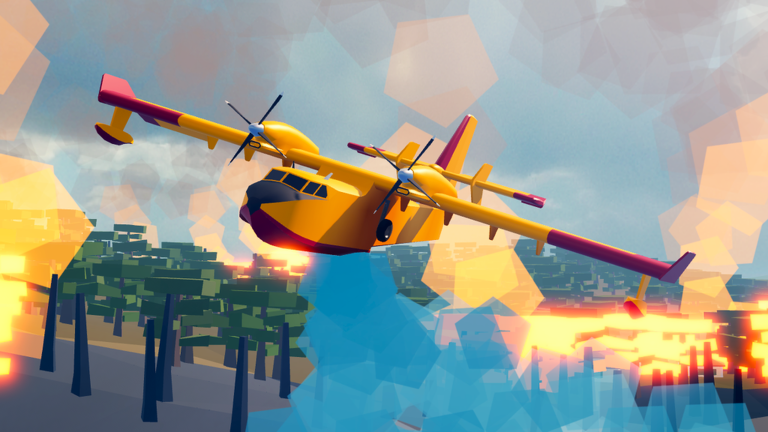
Update 2.4.0 dropped on June 10, 2026, and it has fundamentally altered the competitive landscape of FIRE PLANES. With the introduction of the Phoenix aircraft, the Flame Frenzy event, and a wave of balance changes, the meta has shifted from rocket-heavy burst damage toward speed, positioning, and zone control. As of August 2026, the dust has settled, and this analysis examines who came out on top and how you can adjust your playstyle.
Before the Patch: A Thunderbolt-Heavy Meta
Prior to version 2.4.0, competitive play revolved around the Thunderbolt. Its rockets dealt 150 damage per hit and reloaded quickly, allowing players to eliminate targets before they could react. The Sparrow was rarely chosen due to its low 60 HP, and Nightwing bombers dominated slow, methodical matches by saturating objectives with large blasts. The result was a stale meta where burst damage ruled and agile fighters struggled to find a niche.
Key Changes in Update 2.4.0
The patch introduced three major balance changes and one new aircraft. Here are the exact numbers:
- Thunderbolt: Rocket damage reduced from 150 to 120 per hit, and reload time increased by 2 seconds. This directly curbs rocket spamming.
- Sparrow: Health increased from 60 to 70 HP. A modest buff, but enough to survive an extra hit from many weapons.
- Nightwing: Bomb blast radius reduced by 10%, but bomb drop rate increased. Bombers now trade area denial for sustained pressure.
- Phoenix: A new medium fighter with 80 HP, a rapid-fire cannon (15 damage per shot, overheats quickly), and an afterburner that leaves a flame trail persisting for 3 seconds.
Who Rises and Who Falls
The biggest winner is the Phoenix. Its flame trail is a unique zoning tool that can seal off chokepoints, and its agility makes it excellent for hit-and-run tactics in both standard modes and the Flame Frenzy event. Players who master the afterburner can effectively control space, forcing enemies to take damage or retreat. The Sparrow also gains viability; with 70 HP it can survive a direct rocket hit from a nerfed Thunderbolt, making it a solid dogfighter in the right hands.
The Thunderbolt, while still usable, is no longer the universal answer. The damage and reload nerfs mean pilots must rely more on their primary weapon and aim carefully. Spamming rockets now leaves you exposed during longer reloads. Nightwing players will need to adjust too: the reduced blast radius makes precision bombing more important, but the faster drop rate allows for continuous bombardment of moving targets.
In the Flame Frenzy event, the meta clearly favors fast, agile planes. Capture points rotate quickly, and fire hazards punish hovering. Heavy bombers and stationary playstyles are at a severe disadvantage, while Phoenix and Sparrow shine.
Adaptation Tips for Competitive Players
- Phoenix pilots: Use the afterburner to cut off retreat paths, not just to escape. Lay the flame trail through narrow canyon passages in Molten Canyon to trap pursuers. Manage your overheating by firing in short bursts.
- Thunderbolt mains: Don't abandon your plane. Reserve rockets for guaranteed hits at medium range and keep your reticle steady. Pair with a primary weapon that can finish the job.
- Sparrow enthusiasts: Use your extra HP to win jousts. Engage only when you have the altitude advantage, and dip in and out of cover to avoid sustained fire.
- Nightwing bombers: Pre-drop bombs on capture points before committing to a strafing run. The faster drop rate rewards anticipation.
- Team composition: In Flame Frenzy, run two Phoenix, one Sparrow, and one Thunderbolt for overwatch. Avoid stacking slow planes.
Community Tier List Reactions
The community has been vocal about the changes. On the official Discord, a poll showed 60% approval for the balance pass, while 30% felt the Sparrow buff was unnecessary. Reddit has strong opinions too. User AcePilot99 wrote, 'finally a plane that rewards creative positioning,' praising the Phoenix. Another Redditor, BoomStickGuy, said, 'I get that it was OP, but now it feels sluggish. The rocket nerf was too much.' YouTube creator FireGamerJoe released a Phoenix guide calling it 'the new meta in skilled hands,' and competitive player SkyNinja argued on Twitter that the Flame Frenzy mode should be made permanent.
Tier list creators have also shifted rankings. The Phoenix typically lands in A-tier, just below the top dogs, while Thunderbolt has slipped to B-tier. Sparrow and Nightwing remain in B and C tier respectively, but both are seeing more play in the Flame Frenzy event.
Frequently Asked Questions
Q: How does the Phoenix afterburner work exactly?
A: The Phoenix afterburner is a movement ability that leaves a flame trail behind the plane for 3 seconds. Enemies who fly into the trail take damage over time. The trail can be used to block chokepoints, cut off retreats, or punish pursuers, but it has a cooldown and does not protect the Phoenix from frontal attacks.
Q: Is the Flame Frenzy event a permanent game mode?
A: As of August 2026, Flame Frenzy is a limited-time event that rotates in and out of the playlist. Many community members, including competitive player SkyNinja, have asked for it to become permanent, but the developers have not confirmed a change. It features rotating capture points and fire hazards on the map, rewarding fast and agile planes.
Q: Should I switch from Thunderbolt to Phoenix if I want to stay competitive?
A: It depends on your playstyle. If you rely on burst damage and careful aim, a nerfed Thunderbolt can still work, but you must be more selective with rocket shots. If you prefer mobility, zone control, and fast-paced dogfighting, Phoenix is a strong choice in the current meta, especially in Flame Frenzy. We recommend practicing with both in casual matches before deciding.
Conclusion
Update 2.4.0 successfully shook up the FIRE PLANES meta by rewarding skill, positioning, and adaptability. The Phoenix adds a fresh strategic layer with its flame trail, while the Thunderbolt nerf forces players to rely on fundamentals rather than cheese. The Flame Frenzy event is a welcome change of pace that amplifies the new design philosophy. Whether you main Phoenix, stick with Thunderbolt, or explore Sparrow, the competitive scene is healthier and more varied than ever. Keep an eye on future patches, as the developers have shown they are willing to make bold balance decisions.
Active FIRE PLANES Codes (September 2026)
3 verified codes available for FIRE PLANES; 3 unverified codes are being tracked.