Introduction
Greedy Growers is a Roblox farming experience that sets itself apart with a lightning strike mechanic, creating a tense loop of risk and reward. As of September 2026, the game has amassed over 29.5 million visits and 126,000 favorites, indicating a solid player base. Developed by Banjo Lady Games, with a creator group of over 684,000 members, it has carved a niche in the crowded farming simulator genre. This review dives into how Greedy Growers stacks up against its competitors, evaluating its gameplay, progression, and overall value.
Defining the Genre and Key Competitors
On Roblox, farming simulators typically involve planting, growing, and harvesting crops or trees, often combined with tycoon elements like upgrades and base building. Common competitors include games like Bee Swarm Simulator, which blends farming with pet collection and combat, or Harvest Tycoon, which focuses on relaxed agricultural management with social features. Greedy Growers distinguishes itself by stripping away social interactions and adding a survival-like threat: periodic lightning strikes that can destroy your trees before harvest. This shifts the genre from a cozy, predictable grind to a tense decision-making experience. Unlike most farming games that emphasize cooperation or progression trees, Greedy Growers offers a minimalist loop centered on route planning and timed harvesting.
Where Greedy Growers Excels Against Alternatives
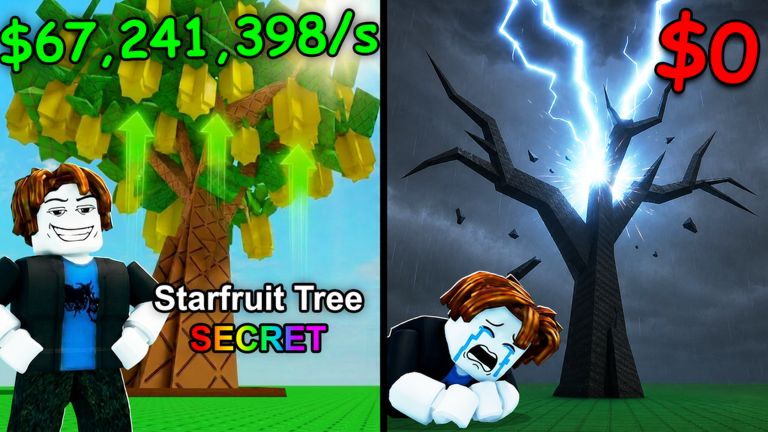
Compared to similar games, Greedy Growers excels in creating genuine tension without toxicity. The lightning mechanic introduces a roguelike element where each planting session feels like a calculated risk. Players must decide whether to harvest early for a smaller payout or wait for full growth, risking loss. This creates a personal stake that many farming simulators lack, where progress is often guaranteed and slow. Additionally, the game’s single-player focus is a rare strength in a genre dominated by social features. With no chat, friend interactions, or trading, it eliminates scammers and toxicity, making it ideal for players seeking a calm, solo experience. The clean social atmosphere contrasts sharply with competitors like Pet Simulator, where trading and social hubs can be overwhelming.
Progression, while circular, rewards strategic play. The loop involves buying seeds from a river, carrying them to plots, and managing growth cycles. Route planning becomes key, as players optimize paths between seed sources and planting areas to maximize efficiency. This spatial puzzle adds depth that many straightforward farming games miss. Monetization also feels fair, with codes providing a premium currency called Tickets, softening any pay-to-win concerns. Light in-game purchases do not block core gameplay, making it accessible for free-to-play users.
Areas Where It Falls Short
Despite its strengths, Greedy Growers falls short in content depth. After initial hours, the loop becomes repetitive. There is no expanding tech tree, base building, or cooperative goals to sustain long-term engagement. The lightning strike is the only major variable, and once players master timing, it turns into an optimization problem rather than a fresh challenge. This lack of variety contrasts with competitors like Bee Swarm Simulator, which offers events, quests, and constant updates to keep players invested.
The game also suffers from poor documentation and community resources. No official wiki or verified Discord has been confirmed, leaving players reliant on third-party guides that may be outdated. This hinders discovery and retention, especially for those who prefer structured progression. In comparison, many farming simulators provide in-game tutorials or active developer communication.
Content creator coverage is minimal, with only a few YouTube videos focusing on code searches rather than deep gameplay. This limits viral growth and new player acquisition, unlike competitors that benefit from influencer streams and community events.
Unique Selling Points
The unique selling points of Greedy Growers lie in its risk-reward tension and solo play. The lightning mechanic creates memorable moments, such as narrowly harvesting a tree or suffering a loss, which adds emotional weight absent in standard farming games. The absence of social features means zero opportunities for scams or toxicity, offering a purified experience for introverted players. Additionally, the game’s lightweight design allows for short, satisfying sessions, perfect for casual play on mobile devices. The developer’s active creator group signals ongoing support, though updates appear infrequent.
Who Should Consider Switching from Other Games
Players who might switch to Greedy Growers include those frustrated with the social demands or complexity of games like Pet Simulator or Blox Fruits. If you prefer a more introspective, skill-based challenge without the grind of social hubs, this game offers a refreshing alternative. It’s also suitable for fans of roguelike elements who want to test decision-making in a farming context. However, if you thrive on progression systems, events, or cooperative play, you might find Greedy Growers too shallow. Consider sticking with competitors like Bee Swarm Simulator for deeper engagement or Harvest Tycoon for relaxed management.
For new players, Greedy Growers serves as a good entry point into Roblox farming games due to its simplicity, but its repetitive nature may lead to quick burnout compared to more feature-rich alternatives.
Q: How does the lightning mechanic work in Greedy Growers, and is it fair?
The lightning mechanic periodically threatens to destroy your growing trees, forcing a choice between early harvest for fewer coins or risking waiting for full maturity. Based on community reports, strikes are unpredictable but not overly frequent, creating balanced tension. It adds a fair challenge that separates the game from passive farming simulators.
Q: What are the main progression barriers in Greedy Growers?
Progression barriers include the slow accumulation of coins for seed purchases and upgrades. Without faster-growing seed types or tools, the early grind can stall. Tickets from codes provide a boost, but permanent upgrades are limited, leading to flattened progression over time.
Q: Is Greedy Growers worth playing if I enjoy solo, low-pressure games?
Yes, if you enjoy solo, low-pressure gaming with a twist of tension. The absence of social interactions and the focus on personal strategy make it ideal for players who want to avoid multiplayer stress. However, its repetitive loop may not hold long-term interest without content updates.
Verdict and Conclusion
Greedy Growers offers a unique blend of farming and tension that stands out in the Roblox genre. Its lightning mechanic and solo focus provide a refreshing alternative to social-heavy simulators, but the shallow content loop and lack of documentation hinder its staying power. For players seeking a concise, risk-reward experience in September 2026, it’s worth trying, especially if you’re switching from more complex or social games. However, those craving deep progression or community features should look elsewhere. Overall, it’s a solid niche title that excels in creating personal stakes but falls short in long-term engagement.
Active Greedy Growers Codes (October 2026)
1 verified code available for Greedy Growers; 3 unverified codes are being tracked.