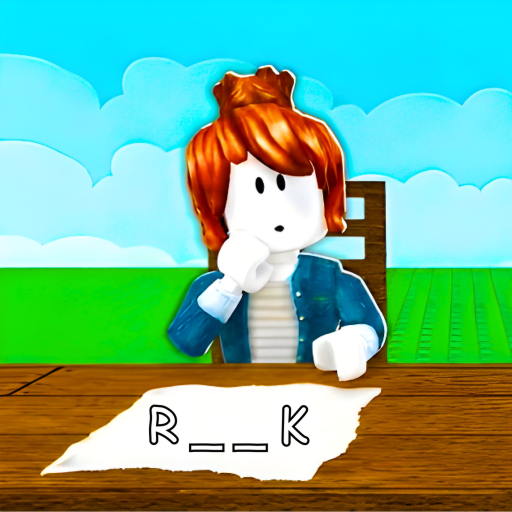
Welcome to the Arena of Words: Guess My Word in April 2026
Roblox's Guess My Word has quickly become a captivating experience, challenging players to a thrilling battle of wits and vocabulary. With its recent updates and a vibrant community, April 2026 marks a fresh start for many, making it the perfect time to dive into the strategic depths of this popular word duel game. Whether you're setting a cunning secret word or deciphering your opponent's hidden phrase, a solid starter strategy is crucial for success. This guide will equip new players with the knowledge to navigate the game's core mechanics, prioritize key resources, and sidestep common mistakes that can hinder early progress.
At its heart, Guess My Word is a competitive player-versus-player (PvP) experience where two opponents each select a secret word. The objective is simple yet challenging: be the first to correctly guess your rival's word by suggesting letters or attempting a full word guess. One wrong move, however, can lead to a swift defeat, adding a layer of high-stakes tension to every round. The game's recent activity, including updates in early April 2026, ensures a dynamic and engaging environment for all word enthusiasts.
Forging Your Path: The Strongest Beginner Route
For newcomers to Guess My Word, establishing a strong foundation is paramount. Your initial focus should be on understanding the rhythm of the game and making calculated guesses. The strongest beginner route emphasizes a balanced approach to both offense (guessing) and defense (setting your word).
Prioritizing Common Letters for Guessing
When it's your turn to guess, resist the urge to pick obscure letters immediately. The most effective strategy for a beginner is to start with the most common letters in the English alphabet. Vowels like 'E', 'A', 'O', 'I', and 'U' are almost always present in words, making them excellent first guesses. Following these, common consonants such as 'T', 'R', 'S', 'N', and 'L' should be your next targets.
By systematically eliminating or confirming these high-frequency letters, you rapidly narrow down the possibilities for your opponent's secret word. This method provides maximum information with minimal risk, setting you up for more informed guesses later in the round. Remember, every correct letter revealed significantly reduces the pool of potential words.
Crafting a Deceptive Secret Word
Equally important is your choice of secret word. As a beginner, it's tempting to pick a very short or simple word, but this often makes it too easy for your opponent. Aim for words that are moderately long, typically between six and ten letters, as these offer a good balance of challenge without being overly obscure.
Consider words that might have less common letter combinations or those that don't immediately jump to mind. Avoid words with too many repeating letters in obvious positions, as this can give away too much information if your opponent guesses one instance of that letter. The goal is to make your word challenging but fair, forcing your opponent to work for every letter.
Strategic Priorities: Beyond Just Letters
While letter frequency is a cornerstone, mastering Guess My Word involves prioritizing other strategic elements. These aren't traditional 'resources' like coins or gems, but rather valuable assets in your mental toolkit.
- Word Length Analysis: Pay close attention to the number of blank spaces representing your opponent's word. This immediately gives you a crucial piece of information. A four-letter word will require a different guessing strategy than a fifteen-letter word. Use this visual cue to guide your letter choices and potential full-word guesses.
- Opponent Psychology: As you play more, you'll start to recognize patterns in how opponents choose their words or make their guesses. Some might favor common words, others might try to be overly clever. Adapting your strategy based on your opponent's playstyle can give you a significant edge.
- In-Game Advantages: Some versions or updates of Guess My Word may feature in-game currency or a shop where players can acquire advantages like hints or extra guesses. Prioritizing wins and consistent play can help you accumulate any such currency, allowing you to leverage these tools when facing particularly tough opponents or words. While specific codes are not discussed here, understanding how to earn and utilize any in-game benefits is a key strategic priority.
Common Mistakes That Slow Progress
Even seasoned word game players can fall into traps. For new players, avoiding these common pitfalls will significantly accelerate your learning and success rate in Guess My Word.
- Random Guessing: The biggest mistake is guessing letters without a clear strategy. Throwing out random letters like 'Z', 'X', or 'Q' early on is highly inefficient and wastes valuable turns, especially if there's a limit to how many incorrect guesses you can make before losing.
- Premature Full Word Guesses: Attempting to guess the entire word too early, before you have enough letters revealed, is a high-risk, low-reward move. A single incorrect word guess can lead to immediate defeat. Only attempt a full word guess when you are highly confident, usually after revealing several key letters.
- Ignoring Word Structure: Failing to consider common prefixes, suffixes, or letter patterns can slow you down. For example, if you have '_ING', you know the word likely ends in 'ING'. Developing an eye for these structures comes with practice.
- Choosing Overly Obscure Secret Words: While challenging your opponent is good, picking a word that is too obscure or rarely used can sometimes backfire. It might be hard for your opponent to guess, but it might also be hard for them to even conceive of, leading to a less engaging game or even frustration. Strive for challenging, yet recognizable words.
Practical Strategy Examples for Word Duels
Let's put these principles into action with some practical scenarios you'll encounter in Guess My Word.
Scenario 1: Early Game Guessing
Your opponent's word has 7 letters. You have 10 guesses. Your first guesses should be 'E', 'A', 'I', 'O', 'U'. If 'E' and 'A' are revealed, you now know two key positions. Next, try 'T', 'R', 'S'. If 'T' is revealed, you might have a word like '_ _ A T _ _ E'. This systematic approach quickly builds a framework for the word.
Scenario 2: Mid-Game Deduction
You've revealed several letters, and the word looks like 'C _ _ M _ N'. You've already guessed common vowels and consonants. Now, you can start thinking about common word patterns. Could it be 'COMMON'? Or perhaps 'CHIMNEY' if 'H', 'Y', 'E' are still possibilities? This is where your vocabulary and pattern recognition come into play. Consider the length of the remaining blanks and what letters would fit logically.
Scenario 3: Setting a Tricky Word
You want to pick a word that's challenging. Instead of 'APPLE', try 'CRUNCHY'. It's a common word but uses less frequent letters like 'C', 'R', 'N', 'C', 'H', 'Y' and has a slightly less obvious structure than a simple CVCVC word. Another good choice might be 'JOURNEY', which includes the less common 'J' and 'Y' but is still a recognizable word. Words with double letters that aren't immediately obvious, like 'COMMITTEE', can also be effective if the game allows for longer words.
Frequently Asked Questions
Q: What are the consequences of a wrong guess in Guess My Word?
A: In Guess My Word, making an incorrect letter guess typically counts against a limited number of allowed mistakes. If you guess the entire word incorrectly, it can often lead to an immediate loss, ending the round in your opponent's favor.
Q: How can I effectively choose a secret word to challenge my opponent?
A: To challenge your opponent effectively, aim for words that are moderately long (e.g., 6-10 letters) and avoid those with overly common letter patterns or too many easily guessable repeating letters. Words with less frequent letters or slightly unusual structures can be particularly tricky.
Q: Are there any in-game purchases or items that can assist me during a word duel?
A: Depending on the specific version or updates of Guess My Word, players may be able to acquire in-game advantages such as hints or extra guesses through a shop, often using currency earned from winning rounds. Focusing on consistent play and victories can help you accumulate these potential aids.
Conclusion: Sharpen Your Lexical Edge
Guess My Word offers a refreshing and competitive word-guessing experience on Roblox. By adopting a smart starter strategy that prioritizes common letter guesses, carefully crafted secret words, and an awareness of common pitfalls, new players can quickly elevate their game. Remember to analyze word length, observe your opponent's tendencies, and leverage any in-game advantages available. Dive into the April 2026 word duels with confidence, sharpen your lexical edge, and outsmart your opponents to claim victory!
Active Guess My Word Codes (April 2026)
0 verified codes available for Guess My Word
This article was researched and generated using AI tools, then reviewed by the RoUniverse editorial team.