Disclosure: This review is written from the ground sources cited by the official wiki. Independent facts are drawn from the Missiles vs Cities Wiki, the secondary wiki hub, and Creator Exchange and Roblox API data snapshots.
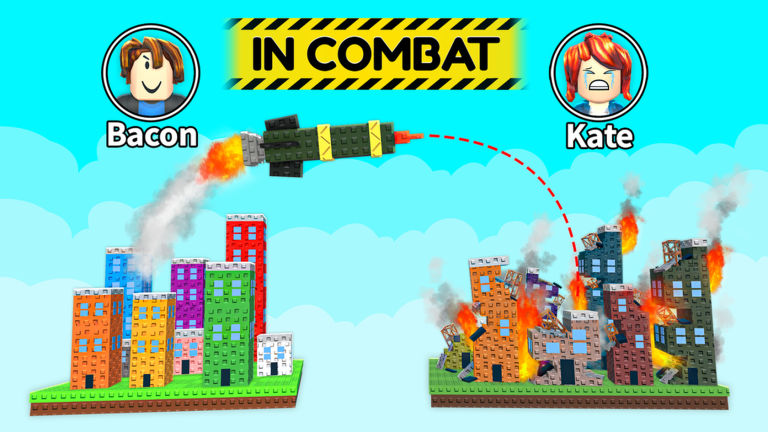
Missiles vs Cities is a Simulation and Tycoon PvP experience by veedio gaems that asks a simple question: how fast can you turn a quiet city into a missile budget? As of the July 9, 2026 Roblox API check, the game was listed with roughly 1.49 million visits and 9,558 players online, while Creator Exchange publicly shows current CCU near 3,090. That is a real, steady audience for a code-free tycoon, and it makes the progression loop worth dissecting properly.
The Core Loop: City Income, Missile Spending, Building Targets
The loop has three moving parts. First, your city generates cash passively, and spending on city infrastructure raises that baseline income. Second, missiles are the offensive layer: you unlock ordnance, then upgrade it, and each tier changes how quickly enemy buildings fall. Third, every raid pays out based on the buildings you actually destroy, so target selection matters as much as raw firepower.
The wiki team frames this as a shift in priority over time. In the early game, city growth leads. By the mid game, high damage missile loadouts take over, because destruction speed is what converts attacks into cash efficiently. Cash farming is most effective when you aim at high value enemy buildings rather than firing at whatever is closest, and rewards reinvested into city infrastructure create the stable long term income loop that keeps a session self funding.
Strengths: A Tier List That Actually Governs Progression
The strongest design decision is that ordnance tiers are not cosmetic. S-Tier missiles are described as the primary destruction tool, with the fastest building clearing speed and the highest destruction to cost ratio, which directly speeds progression. A-Tier pieces sit below that as balanced workhorses, and the lower tiers exist mainly to be replaced. Having an explicit tier structure means the game always has a next rung to climb, which is exactly what keeps a tycoon from flattening out.
A Level Playing Field
Missiles vs Cities ships with no game passes, no premium currency, and no pay to win shop. Every missile and every upgrade is bought with in game cash earned from attacks and city income. For a Roblox tycoon, that is unusual, and it means leaderboard position reflects patience and targeting skill rather than spending.
Readable Combat Feedback
The 8-player server size keeps competition legible. You can watch rivals build up, spot an underdefended block, and plan a raid instead of spraying damage into a crowd. Watching structures collapse under a higher tier missile gives a tangible reward for the grind.
Community Documentation
The unofficial wiki covers city upgrades, missile priorities, damage and cooldown concepts, cash farming routes, target guides, missile range, and base defense. That library substitutes for an in game tutorial and gives new players a route that works on day one.
Weak Points: Cold Start, Thin Systems, No Live Hooks
The cold start is rough. With no in game tutorial, a new player lands in a city with no guidance on upgrade order, and B and C tier ordnance clears buildings slowly. Expect an hour or more of farming before a first meaningful upgrade unlocks, and expect that stretch to feel grindy without a wiki open beside the game.
Systems are also shallow for a long session player. Missile range, launch upgrades, and base positioning exist as tactics, but the wiki itself notes that some missile data still needs screenshots to be confirmed, which tells you how thin the documented depth currently is.
The retention picture is the biggest open question. There is no code menu and no confirmed code pipeline, so there is no periodic reward drip to bring lapsed players back. The wiki updates archive recorded the July 9, 2026 check as a no-code status confirmation, and content updates appear to be quiet. When new codes are released, this page is monitored and updates the moment they drop, but right now there are none to redeem, and no rewards can be claimed.
Progression and Monetization Analysis
Progression is pure time plus strategy. The community recommended order is: grow income first, buy a defensive buffer, then push toward S-Tier ordnance as fast as cash allows. Because there is zero monetization pressure, sessions never hit a paywall, but they also never get a shortcut. That makes the game honest and slow in equal measure.
Retention leans entirely on the loop itself. There are no events, no daily reward structures, and no code rewards to break up a session, so players who enjoy the rhythm of building, targeting, and reinvesting will stay, and players who need novelty will drift.
Who This Suits
This is a good fit for free to play players who want an even playing field, for tycoon fans who enjoy planning income curves, and for competitive players who like readable 8-player PvP where targeting decisions matter. It is a poor fit for players who want instant power, guided onboarding, or frequent live events.
FAQ
Q: How do missile tiers change my cash farming speed?
S-Tier ordnance clears buildings the fastest and carries the best destruction to cost ratio, so it converts attacks into cash most efficiently. Lower tiers farm noticeably slower, which makes tier progression the central bottleneck in Missiles vs Cities.
Q: Is city income or missile power the better early investment?
The wiki beginner route recommends city growth first. A stable income base funds everything after it, and only once that baseline is healthy should spending shift to high damage missile loadouts.
Q: Does the developer sell anything that speeds up progression?
No. There are no game passes and no premium currency. Every missile and upgrade is purchased with in game cash from city income and building destruction.
Verdict
Missiles vs Cities is an honest free to play tycoon with a clear progression spine and no monetization pressure. Its tier list gives the game direction, and the 8 player PvP keeps raids legible. It is held back by a cold start with no tutorial, thin system depth, and no live reward hooks to drive returns. Play it if you enjoy slow, self directed growth with real tactical decisions. Skip it if you need frequent updates and onboarding. On balance, it earns a cautious recommendation for patient free to play players in October 2026.
Active Missiles vs Cities Codes (November 2026)
No verified active codes are available right now for Missiles vs Cities.