Why Economy Wins Battles in Navy War
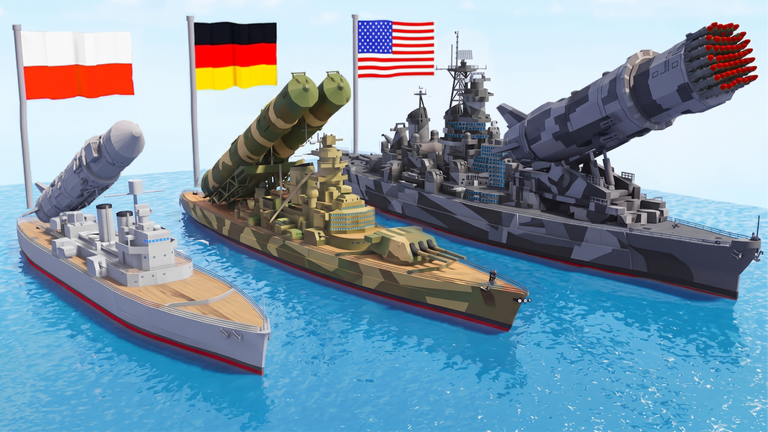
Navy War is a strategic Roblox experience where you build a naval base, grow an economy, upgrade facilities like docks, shipyards and factories, then unlock a ladder of warships from destroyers up to aircraft carriers. Most players treat the shop button as a simple upgrade menu and spend gems the second they appear. Players who read the economy as a system, not a shopping list, move faster toward the strongest fleet on the high seas. This guide breaks down how Navy War really converts buildings into power, when to spend, what retains value, and which spending habits quietly stall your empire.
How the Navy War Economy Actually Works
Three facilities form the money loop. Factories are your income engine, producing the gems that fund everything else. Docks expand fleet capacity so you can field more hulls at once. Shipyards gate the heavier classes, which is where your offensive ceiling rises. The trap is that all three compete for the same gem pool at every stage of the game, so the ordering of upgrades matters as much as the upgrades themselves.
Think of it as a chain: factory income funds dock capacity, dock capacity lets you hold more ships, more ships win battles, battles protect the factories that produced the gems. Break any link and the whole loop slows down. Because gems are the shared currency across economy and military spending, every purchase is effectively an opportunity cost decision. Every gem spent on a cosmetic or premature upgrade is a gem not compounding into fleet strength.
The base loop in practice
- Factory levels raise passive gem income, which is the only income that does not require risking your ships.
- Dock upgrades raise how many warships you can keep active, which directly raises your defensive and offensive pressure.
- Shipyard upgrades unlock the heavier classes that decide late-game battles.
Best Methods for Earning Gems Fast
Passive factory income is steady but slow, so the fastest Navy War earners combine it with active play. Push factory levels during quiet server moments when nobody is raiding, then convert those gems into docks so your fleet can defend what you built. Fight while your upgrades are not in a fragile half-finished state, because a base with new docks but no ships to fill them is a target.
- Hold a factory-first push until your gem income comfortably covers a dock level.
- Take dock capacity immediately so incoming income has somewhere to convert into ships.
- Only then push shipyard levels for the next hull class.
- Alternate back to factory whenever the gem curve flattens out.
That rhythm keeps income, capacity and firepower growing together instead of in lurching spikes that leave windows of weakness.
Spending Timing: When to Buy and When to Hold
Navy War rewards patience around upgrade cycles. Buying an expensive warship right before a fight drains the gems you would need for emergency repairs or a counter-build, so time large purchases for the stretch after a victory rather than before a risky push. Watch the server: when opponents are scattered and quiet, spend into economy buildings for compounding returns. When enemy fleets are grouping up, hold gems in reserve so you can answer with the exact hull class they are weak to.
The same logic applies to the shop itself. Since everything shares one currency, treat each shop visit as a decision between income, capacity and firepower, and never spend all three at once. Keeping a gem buffer is the single biggest difference between a player who recovers from a raid in minutes and one who restarts the loop from zero.
Items That Hold or Gain Value Over Time
Not every purchase ages the same way. Value in Navy War compounds when a purchase keeps paying after you stop thinking about it.
- Factories: the highest long-term value purchase, because income stacks for the entire session.
- Docks: permanent capacity, useful in every mode and every stage of the game.
- Destroyers: cheap, versatile patrol hulls that stay relevant as screening ships once your fleet grows.
- Submarines: scouting and ambush tools whose usefulness rises as enemy fleets get bigger and more predictable.
- Cruisers and battleships: strong mid-game anchors that carry frontal assaults while you save for the top of the ladder.
- Aircraft carriers: the prestige late-game purchase, best bought once your economy is already generating steady gems.
Common Economy Pitfalls to Avoid
Overspending on military during an income dip. Buying a cruiser while your factory is under-leveled means you fund repairs with no cash flow and stall your own growth.
Upgrading docks without ships to fill them. Empty capacity looks like progress but attracts raids against a base that cannot defend itself.
Ignoring base layout around factories. If your income buildings sit in an exposed position, one successful enemy push erases hours of compounding gem income.
Chasing the top hull too early. Aircraft carriers only pay off when your economy can absorb the cost without freezing dock and shipyard progression.
Spending every gem immediately. A zero balance during peak server hours forces you into fights you would otherwise avoid, which is how empires shrink.
FAQ
Q: Should I upgrade factories or docks first in Navy War?
Start with factories until your gem income comfortably covers a dock level, then take the dock so new income converts into fleet capacity. This order keeps income and capacity growing together and prevents empty dock slots or starved ship purchases.
Q: When is the right time to buy an aircraft carrier?
Buy it late, once factory income is steady enough that the purchase does not freeze dock or shipyard upgrades. Carriers are a dominance purchase, not a recovery purchase, and buying one during an income dip leaves you unable to defend what you built.
Q: How do I protect my gem income from enemy raids?
Keep destroyers on patrol near your factories and fill dock capacity before pushing shipyard levels. A base with full docks and screening ships can answer an incoming push, while an over-upgraded base with empty slots loses its economy in a single raid.
Conclusion
Navy War is won in the shop as much as on the water. Treat factories, docks and shipyards as one connected loop, spend gems on a schedule instead of on impulse, and put your money into assets that keep paying after the purchase. Control the economy and the strongest fleet follows on its own.
Active Navy War Codes (October 2026)
2 verified codes available for Navy War; 3 unverified codes are being tracked.