The free-to-play question behind the chaos
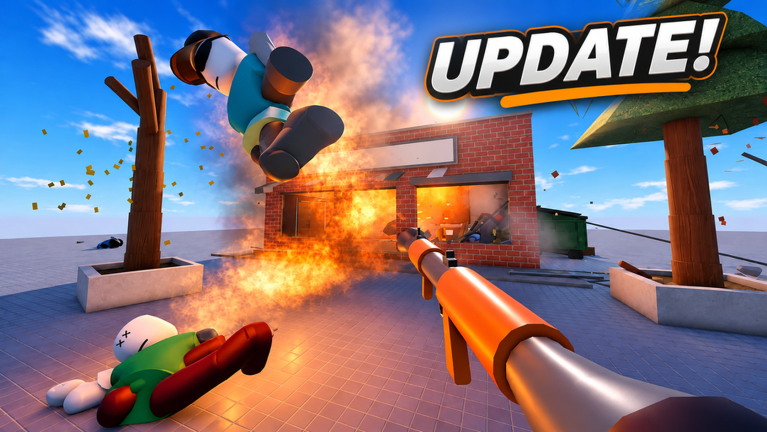
Ragdoll Destruction Playground is one of Roblox's more seductive sandbox pitches: drop a limp ragdoll into a scene, arm it with weapons, and let physics do the rest. Independent coverage of the experience describes sessions that swing from ordinary testing to full absurdity, with players tossing dummies into tornadoes and black holes to see what breaks first. The fantasy is cheap to enjoy. The interesting question for November 2026 is whether the game's economy quietly sorts players into those who get the wild toys and those who watch.
This review focuses on that fairness angle. The core loop is immediate and mostly free: spawn, equip, experiment, reset. There is no tutorial wall and no locked starter map standing between you and the first experiment. What sits behind the loop is a shop menu reachable from the corner of the screen, and a reward structure built around three currencies of attention: Robux, playtime, and promotional codes.
How the monetization model actually works
Ragdoll Destruction Playground uses a cosmetic-plus-power shop rather than an upfront pass. The store menu doubles as the redemption hub, with a dedicated tab for promotional entries, which means the game constantly frames purchases and freebies in the same visual space. That framing is the most aggressive part of the monetization, not the prices themselves.
Powers are where the model gets interesting. Community guides for the experience call out named abilities such as Black Hole and Chibaku Tensei as headline toys, abilities that rewrite how objects and ragdolls interact in a scene. Because powers change what you can do rather than how you look, they occupy a gray zone: they are technically cosmetic in the sense that they alter a sandbox rather than a competitive stat sheet, but they materially expand the creative range of a session.
What free players get, and where the paywall sits
Nothing essential is paywalled. Free players can spawn ragdolls, use the default weapon set, and reach every core physics interaction. The three-milestone structure of the game's public identity also tells you the developers are pushing reach rather than extracting from day-one players: expired promotional entries tied to visit and thank-you anniversaries show a pattern of rewarding audience growth.
The paywall is soft and sits at the edge of novelty. Premium skins such as rainbow variants and the rainbow werewolf skin are clearly desirable, and rarer powers are the ones that generate the most spectacular clips. Free players are never blocked from playing, but they do end up on the slower side of the spectacle curve, which matters in a game where the content is the spectacle.
Grind wall analysis: how long does free actually last?
There is no formal progression track, no battle pass, and no level gate in Ragdoll Destruction Playground. That absence cuts both ways. It removes the classic grind wall entirely, because there is nothing to grind toward. But it also removes the sense of earned growth that keeps sandbox players engaged for weeks.
In practice the free player's "progression" is discovery: learning which powers stack, which weapons produce the funniest failures, and which setups make ragdolls behave unexpectedly. That loop sustains short sessions extremely well. Over longer play, the absence of unlockable milestones makes the shop feel like the only visible ladder, which is exactly where monetization pressure concentrates.
Cosmetics versus powers: where the money goes
Two distinct purchases sit in the shop. Cosmetic skins are the honest option, since they change nothing about physics and are pure identity. Power purchases are the debatable ones. A player who buys a signature power is not gaining an advantage over anyone else in a non-competitive sandbox, but they are gaining access to the experiences other players make videos about.
Fairness verdict: the split is reasonable for the genre. No purchase makes a free player lose, and no purchase is required to participate. The weak point is disclosure, not pricing. New players are rarely told which powers are freely reachable through other channels and which are shop-only.
Codes as the free player's support system
The most important equalizer in Ragdoll Destruction Playground is its code program. Redeeming takes seconds: open the Shop button, switch to the Codes tab, enter an entry, confirm. The entries themselves are not case-sensitive, and the main failure mode is a stray space pasted before or after the text.
Codes function as a periodic redistribution of shop content to non-paying players, and the developers have released them consistently around milestones. For a free player this is the single best mechanic in the game's economy, because it delivers shop-flavored items without Robux. Our tracker currently lists a small number of active entries with older anniversary entries already expired, so the window on each drop is short.
How it compares to genre norms
Most Roblox ragdoll and physics sandboxes monetize through cosmetic crates or starter bundles. Ragdoll Destruction Playground is more generous than average on access and more ambitious than average on what it sells, because it sells abilities rather than paint jobs. Against pay-to-win titles, it is entirely benign: there is no scoreboard, no opponent, and no way to lose. Against fully free sandboxes, it feels slightly thinner for players who ignore both the shop and the codes.
Frequently asked questions
Q: Is Ragdoll Destruction Playground playable without spending Robux?
Yes. Every core system, including spawning ragdolls, weapons, and physics experimentation, is available from the first session. Spending only accelerates access to premium skins and signature powers.
Q: Do powers like Black Hole give players an unfair advantage?
Not in a competitive sense, because the game has no opponents or scoring. Powers expand what you can create in the sandbox, which makes them feel powerful without letting anyone beat anyone else.
Q: Why did a Ragdoll Destruction Playground code fail to redeem?
Most failures come from a trailing space, since entries are not case-sensitive. If the text was entered correctly, the entry has likely expired, as older anniversary entries already have.
Verdict
Ragdoll Destruction Playground is free-to-play fair, with one caveat. The physics sandbox is genuinely fun, the shop never blocks access to the core loop, and the code program regularly hands shop content to non-paying players. Its weakness is that powers, not cosmetics, are the main draw, and powers are the main purchase, so the most creative toys sit closest to the checkout.
Best for: players who want short, chaotic physics sessions and are happy redeeming codes to expand their toybox. Skip if: you expect long-term progression, or you dislike a shop that shares screen space with the game itself.
Active Ragdoll Destruction Playground Codes (November 2026)
3 verified codes available for Ragdoll Destruction Playground; 6 unverified codes are being tracked.