Why Hidden Systems Decide RoFront Wins
RoFront looks like a simple map painter at first glance, but the players who conquer the world in October 2026 are the ones who understand the systems sitting under the surface. The main goal never changes: expand your army, attack or ally with neighbors, build cities, ports and factories, launch nukes, and take as much of the world as you can. The difference between a run that dies at 2 percent and one that keeps climbing past 6 percent comes down to how you read troop counts, how you stack infrastructure, and when you choose to strike.
The City Troop Cap Is the Real Economy Engine
The single most important hidden number in RoFront is the city troop cap. Every city you build increases your troop cap by 25,000, which means your army ceiling grows in fixed jumps rather than gradually. Players who ignore this end up with gold they can never spend, because the game will not let field more troops than the cap allows.
This is why experienced RoFront runners stop everything and build cities mid-war. In real matches you will hear creators pause an attack, throw down a city, and immediately push again. The city does not just add land value, it unlocks the size of the next offensive wave. Treat each city as a 25,000 troop loan against your future income.
Factories Are Your Gold Tap
Factories are the income half of the loop. Cities raise the cap, factories fill it. Once your gold flow is steady, you can keep placing cities, ports, and defense posts without stalling the war effort. Ports and ships also matter, because ships give you reach across water and let you open a second front instead of grinding through a heavily defended land border.
Combine the two systems and you get the standard advanced rhythm: build a factory, bank gold, drop a city to raise the cap, spend the gold on troops, then move on the next weak neighbor before the enemy recovers.
Hidden Defense Post Placement
Defense posts are the mechanic most beginners underuse. The smart placement rule is simple: scatter defense posts across your country, weighted toward wherever your important buildings sit. Cities, ports, and factories are the targets worth protecting, so ring them with defense posts rather than clumping every post on one border.
If you have surplus gold, spread defense posts everywhere. A nation covered in layered defense posts forces attackers to burn enormous troop counts on the front door while your own army stays intact for the counterattack. This is also how small territories survive: a tiny country with heavy defense posts and a hidden army will eat an attacking wave whole.
How to Actually Use These Mechanics Together
- Open the match by clicking to expand your army quickly in the first seconds while the countdown finishes.
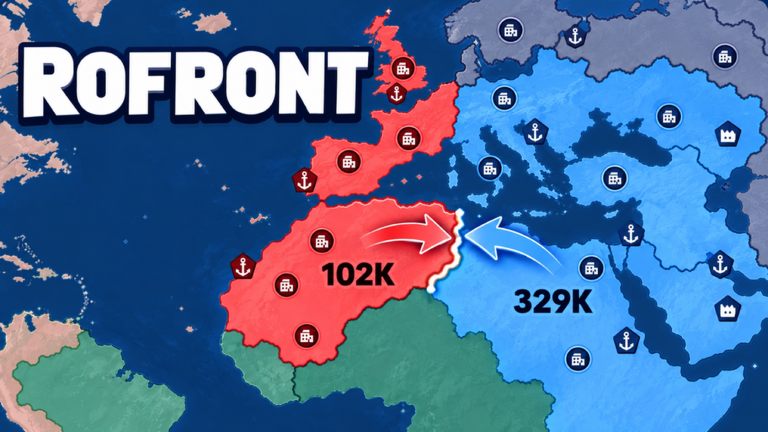
- Check your target's troop count before every attack. A small map presence can hide a massive defending army.
- Send 50 percent or 75 percent attack stacks instead of dumping everything, so a failed push does not wipe you out.
- Build a city right after a successful capture to convert that new land into 25,000 more troop cap.
- Drop a factory in the same region so the gold keeps flowing for the next wave.
- Scatter defense posts around your cities, ports, and factories before you push again.
- Watch the world conquest leaderboard and keep expanding, because the top nations sit at around 6 percent while a fresh player sits near 2 percent.
Why These Systems Matter Later in the Run
Early game, one city feels optional. Late game, your troop cap decides whether you can hold three fronts at once. Nukes, alliances, and naval pushes all cost gold and troop space, and both come from the same infrastructure backbone. Nations that built cities and factories steadily can afford to launch nukes against player nations while still defending their own borders. Nations that skipped infrastructure run out of troops the moment a neighbor counterattacks.
Common Mistakes That Kill Runs
- Judging enemies by map size. A tiny country can hold a huge army. Always read troop numbers, not borders.
- Attacking while weak. Strike when you are strong and the enemy is weak, never the reverse.
- Letting enemies surround you. If another player circles your territory, expanding gets harder and you become boxed in on every side.
- Ignoring defense posts. Flat borders with no defense posts behind your cities and factories are free wins for attackers.
- Skipping ships. Ports and ships are extremely useful for opening routes that land borders cannot provide.
- Overcommitting stacks. Sending 100 percent into an unknown defender is the fastest way to lose an entire army.
FAQ
Q: How much troop cap does each city add in RoFront?
Each city you build increases your troop cap by 25,000, so your maximum army size grows in 25,000 increments as you place more cities.
Q: Should I check troop counts before attacking a small neighbor in RoFront?
Yes. A country can look tiny on the map while holding a massive defending army, so always review the opponent's troops and send a 50 or 75 percent stack rather than your full force.
Q: Where should defense posts go in RoFront?
Scatter them across your country with extra coverage around important buildings such as cities, ports, and factories, and expand the spread further whenever you have surplus gold.
Conclusion
RoFront rewards players who treat infrastructure as strategy instead of decoration. Cities give you the 25,000 troop cap jumps that make big offensives possible, factories keep the gold running, defense posts let small nations survive, and careful attack timing turns each capture into permanent growth. Build the loop, read the troop counts, and keep expanding toward the world conquest leaderboard.
Active RoFront Codes (October 2026)
No verified active codes are available right now for RoFront.