The Free-to-Play Campus Park Test
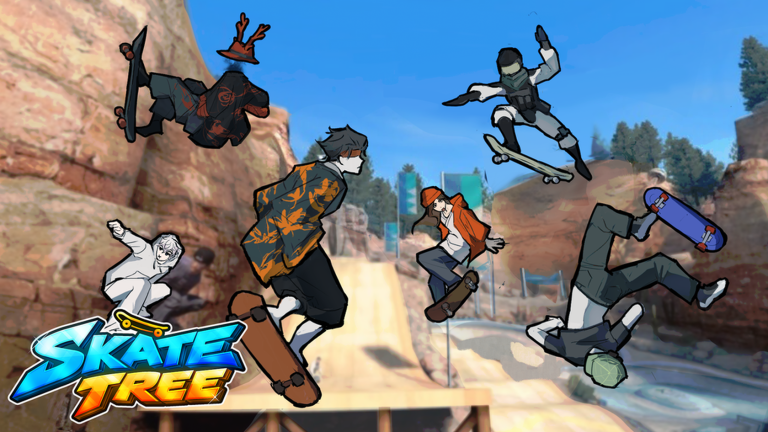
Skate Tree is built by RNE Third Vault as a skateboarding hangout inspired by classic board franchises like Tony Hawk and Skate, and it drops you straight into a campus-style skate park where the entire loop is skating, pulling tricks, and earning Points. This review looks at one question above all others: can you actually enjoy Skate Tree without spending Robux? The short answer is yes, with a caveat about pacing that we will get into below.
From the first session the game is transparent about its structure. There is no campaign, no story gate, and no locked district. You spawn into the park, you ride, and every trick you land converts directly into Points. That single currency drives the whole economy, which is both the game's cleanest design choice and the source of its biggest friction.
How the Monetization Model Actually Works
Skate Tree runs on a Points-for-looks model. Points are earned through gameplay, primarily by trying tricks, and are spent in the in-game shop on board skins and deck customization so you can drip out your board and skate with your own style. The pressure point is that Points are also handed out in bulk through redeemable codes, which means the developer has two taps feeding the same wallet: time spent skating, and code redemption.
There is no evidence of a mechanics-selling storefront. Nothing in the current loop suggests that a paying player grinds faster, lands tricks more easily, or unlocks rails and terrain that free players cannot reach. The park is one shared space with the same trick vocabulary for everyone. For a Roblox sports game, that is a noticeably honest foundation.
What Free Players Get Versus What Sits Behind a Paywall
Free players get the full park, the full trick system, the full Points earn rate, and access to the same code drops as everyone else. The campus-style park is not segmented into a paid tier, and skate solo or with friends is available without a purchase step. That means the paywall, such as it is, sits entirely on cosmetics.
The limitation is that cosmetics are the only expression layer in the game. Since Skate Tree is a social skating sandbox, looking distinct is a real part of the experience rather than a throwaway extra. If you refuse to spend and refuse to chase codes, your deck options will lag behind players who do both, and in a park full of other skaters that visual gap is visible.
Grind Wall Analysis: Points Per Trick
Progression in Skate Tree is not tiered, so the usual grind wall is replaced by a grind curve. The game actively rewards experimentation: the more tricks you try, the more Points you earn, and harder moves on rails pay better than simple cruising. That is a healthy design because it makes skill acquisition the currency faucet, but it also means a player who sticks to basic movement will feel the shop prices sting more than a player who commits to learning the trick system.
Codes soften this considerably. Historical drops from the developer have come in the range of roughly 8,000 to 20,000 Points per code, and they have repeatedly been tied to community milestones such as member counts, like counts, and visit milestones. That pattern tells you something important about the developer's intent: code rewards function as a recurring boost rather than a one-off launch gimmick, which keeps returning players funded without asking them to open their wallet.
Cosmetic Purchases Versus Power Purchases
This is where Skate Tree earns its fairness credit. Board skins and deck styling are pure presentation. They do not alter trick output, earn rate, or movement, so the purchase decision is always about identity rather than advantage. A player who buys nothing is not weaker, they simply look plainer.
On the flip side, a purely cosmetic shop means there is no non-cosmetic sink for large Point balances. Once you have the deck you want, Points lose their purpose. Long-term players may find the economy shallow, and that is the clearest structural weakness in the current build.
Codes as Free-to-Play Support
The code system is a genuine lifeline for non-spenders. Codes are published by the developer and covered by major outlets, and there is an official Discord server linked on the Roblox page where announcements land alongside community chatter. Redemption is done in-game: open the menu, choose the Redeem Code option, enter the code, and confirm.
One honest note for this October 2026 snapshot: there are currently none to redeem for Skate Tree, so this page verifies and lists codes as they are released, and the live list updates the moment new ones drop. Codes also expire, usually without warning, which is standard for the genre but worth planning around. Do not sit on a code for weeks.
Compared to Genre Norms
Against rivals like Skateboard Simulator, Skate Tree leans casual and low-pressure rather than progression-heavy. Where many Roblox sports games layer upgrade trees and stat multipliers over their core loop, Skate Tree keeps a flat trick-based earn rate and spends its design budget on feel and presentation. That makes it a better pure hangout and a worse long-session grinder. Players coming from stat-climbing simulators should recalibrate expectations.
Frequently Asked Questions
Q: Does Skate Tree sell any power or stats in its shop?
No. Everything currently sold in the shop is cosmetic, focused on board skins and deck customization. Trick performance, Points earn rate, and park access are identical for every player regardless of spending.
Q: Is the campus-style park free to skate from my first session?
Yes. There is no entry cost and no locked zone. You spawn directly into the park and can cruise, grind rails, and practice tricks solo or with friends immediately.
Q: What happens to Skate Tree codes after they expire?
Expired codes stop accepting redemption, typically without a public countdown. Developer drops have historically been tied to milestones and refreshed regularly, so watching the official Discord and the Roblox page is the fastest way to catch the next window.
Verdict: Honest, Light, and Worth Your Time if You Like the Loop
Strengths: a flat, skill-driven Points economy with no pay-to-win angle, a shared park open to everyone, trick experimentation that pays out mechanically, and a steady culture of milestone code drops that fund free players.
Weaknesses: a cosmetic-only shop means no deep Point sink for veterans, the earning rate favors players who commit to learning tricks, and the current October 2026 code window offers no redemption targets at this moment.
Skate Tree is best for players who want a relaxed social skating sandbox with clean monetization rather than a competitive progression ladder. If you enjoy session-based trick practice and cosmetic expression, it is one of the fairer free-to-play entries in the Roblox skateboarding space right now. If you need a metagame to chase, look elsewhere. For everyone else, drop in, learn the rails, and let the Points roll in at your own pace.
Active Skate Tree Codes (October 2026)
No verified active codes yet for Skate Tree; 10 unverified codes are being tracked.