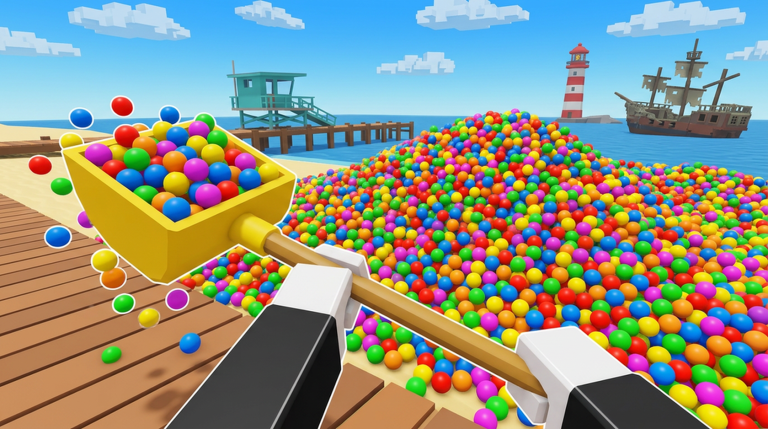
Introduction: a throw-and-grow sim with an unusually open live-service pulse
Throw a Seed, the Fish Time Studios experience at place ID 129081220403721, sits in a crowded corner of Roblox where launching something far and then profiting from the result is a well-worn formula. What separates this one is how visible its live-service health is. As of late November 2026, the game's tracked code list shows six active entries and zero expired, and independent coverage from PCGamesN, Dexerto, and GameRant all refreshed their pages within days of each other in mid-November. That is a studio keeping a promise, and it shapes how the whole game feels to play right now.
This review looks at the actual loop, the depth behind it, update quality, fairness, and community infrastructure, then settles on who should play it.
How the game feels right now
The core verb is the throw. You send a seed down a canyon, and every zone it passes through adds luck to the attempt, so distance and route choice are not just spectacle, they are the mechanic. Dexerto's breakdown describes passing through luck zones as the deciding factor in what you manage to grow when the seed finally lands, and the fan wiki lists a canyon throw loop as one of the game's defining systems. In practice this makes a single throw read as a small physics puzzle with a payout screen attached, which is a stronger hook than the typical idle tap.
Second to that is pull-up training. The pull-up bar is upgradeable, and throws and boosts feed back into training progress, giving you a second progression track that operates between throws rather than during them. The short onboarding tutorial gets you to both systems quickly, and the settings menu in the top-left corner keeps redemption and configuration one click away. The session-to-session feel in November 2026 is snappy: throw, train, plant, collect, repeat.
Content depth: the garden is where the sim actually lives
Throwing alone would thin out fast. The depth comes from what happens after the landing. You plant the associated tree or shrub, and that plant then earns money on a continuing basis, turning each throw into a long-term asset rather than a one-off score. The fan wiki documents garden income and an Index of plants as separate pillars, which suggests a collection layer with genuine breadth, plus tier-list and first-hour guides that only exist because players are sorting content rather than running out of it.
Money feeds the pull-up bar upgrades and in-game items, so the economy closes a loop: better throws grow better plants, plants fund training, training improves the next throw. That interlocking design is the game's real strength, and it is why Throw a Seed reads as a simulation rather than a minigame.
Update quality and the code pipeline
Live-service health was the chosen lens here, and the evidence is consistent. Six grounded sources currently back the game's tracked rewards, with a grounded confidence of 0.843, and coverage timestamps cluster between November 15 and November 20, 2026. A YouTube upload in the same window covering the current active set shows creator interest is not lagging the official cadence. The wiki also carries an updates log with a latest stamp, which is more transparency than many comparably sized Roblox sims offer.
The honest caveat: heavy code coverage can mask thin patch content. Nothing in the current research points to a new mode, map, or event shipping alongside the reward drops, so the pipeline is generous on freebies and unproven on structural additions. If you play for new mechanics, keep expectations modest.
Fairness and grind balance
Monetization pressure here is low by genre standards. The systems that gate progress, the pull-up bar and plant rarity, are both reachable through play, and the reward pipeline hands out cash, boosts, potions, and extra lucky throws to active players. For free players, that means the gap between spending and not spending narrows noticeably if you simply check in.
The trade-off is time. Luck stacking through canyon zones and waiting on plant income are patience mechanics, and rare plants will not land on demand. Players who need instant progression will feel the grind; players who treat it as a low-stress daily routine will not.
Social and community strengths
Community infrastructure is a genuine plus. A Discord exists and is reachable through the Roblox Social and Communities section, which is the safest route and the one the wiki explicitly recommends rather than a random invite link. The wiki itself carries guides, a tier list, player pages, and a links hub, and it is careful about disambiguation: this is the Fish Time Studios game, not the similarly named Throw a Seed! by Bit-Smash Games, which shares none of its systems or rewards. That kind of clarity is rare and useful for newcomers.
FAQ
Q: What is the canyon throw loop in Throw a Seed and why does it matter?
It is the cycle of launching a seed down the canyon, passing through luck zones that add luck to the attempt, then planting whatever grows when it lands so it produces money. Distance and zone coverage directly decide plant rarity, which is why players optimize routes rather than just throwing harder.
Q: Does Throw a Seed require spending Robux to keep up in November 2026?
No. Progression systems such as the pull-up bar upgrade and plant income are reachable through play, and the game's active reward pipeline supplies cash, boosts, and potions to regular players. The real cost is time, since luck stacking and plant growth are patience-based.
Q: Which Throw a Seed should I play, and how do I join the community safely?
Play the Fish Time Studios version at place ID 129081220403721. The similarly named Throw a Seed! by Bit-Smash Games is a different experience with separate systems. For Discord, join only through the Roblox Social and Communities section linked from the game's own page rather than third-party invite links.
Verdict
Throw a Seed is in healthy shape for a small live-service sim. The canyon throw loop gives each attempt weight, the garden and pull-up systems give the game a second and third layer, and a steady reward pipeline with six active entries and zero expired keeps returning players rewarded. Its weaknesses are honest ones: unconfirmed structural update content, a luck-and-wait grind that will not suit impatient players, and a community that still has to work around name confusion with a rival title.
Play it if you want a relaxed daily routine with real strategic depth in throw routing and plant collection. Skip it if you need frequent new modes or instant progression. For free-to-play players in particular, this is one of the safer bets in the current Roblox sim shelf.
Active Throw a Seed Codes (November 2026)
6 verified codes available for Throw a Seed.