Introduction: a survival round game that keeps its promise simple
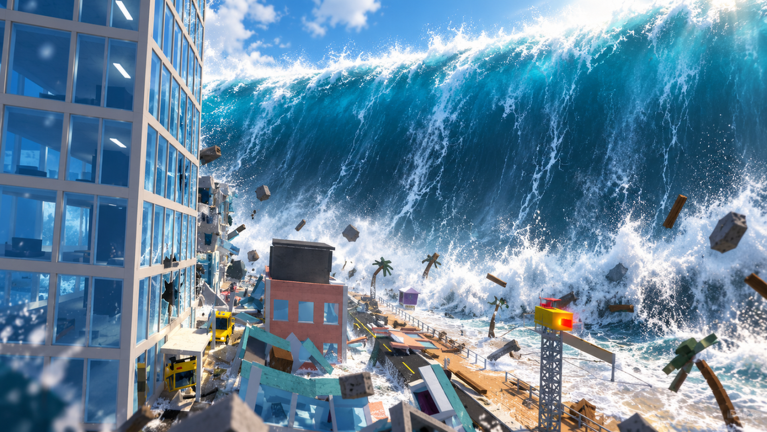
What If Disasters is one of the easier Roblox experiences to explain and one of the harder ones to put down. A disaster triggers at the start of a round, you get 100 HP, and your only job is to still be standing when the timer runs out. The disaster does not stay polite. It intensifies, damage ticks land harder, and the last stretch of a round is genuinely more lethal than the first. When the round ends you are teleported back to the hub area, handed XP and Credits, and a few seconds later the cycle begins again.
This review looks at the game as it exists in October 2026, judged against the genre it actually belongs to rather than against an ideal version of it. The verdict below covers the loop, the progression feel, the pressure to spend, and who should be playing this instead of the competition.
The genre and the main competitors
What If Disasters sits in the round-based survival genre on Roblox, the same family as disaster escape games, natural disaster survival style lobbies, and obstacle survival modes where a hazard rolls in and players outlast it. The shared formula is identical across all of them: hazard, survival window, reward, repeat.
The difference between competitors usually comes down to what you do during the window. Some rivals fill it with building, some with puzzles, some with chaotic movement challenges. What If Disasters fills it with positioning and patience, and it adds a prestige layer on top of that loop. Prestige disasters are the system that separates this title from a plain survival clone, and they are the feature this review anchors on.
Where What If Disasters excels against alternatives
- Readability. The rules fit in a single sentence. New players do not need a tutorial video to understand that 100 HP is a buffer, not a health bar to spend. Compared with rivals that layer meters, crafting, and inventory on top of survival, this game gets out of its own way.
- Fast, clean loop. Rounds end, you return to the hub, rewards land, a new round starts seconds later. There is no dead lobby time padding the session, which is exactly where many competitor games lose players.
- Prestige disasters as a ceiling. This is the real hook. Prestiging disasters earns more Credits and XP, so the long game is not just surviving the same round over and over. It gives veteran players a reason to chase harder versions of hazards they already know.
- Low friction controls. Movement is W, S, A and D, jumping is Spacebar, and interaction is the E key. Nothing needs remapping, nothing competes for attention, and that keeps the skill floor honest.
Where it falls short
The same simplicity that makes the game readable also caps its depth. With 100 HP and no described toolset, a bad spawn or an unlucky position ends your round through no fault of your own, and the game offers little in the way of comeback mechanics. Rivals with building or mobility options at least let a trapped player react. Here you absorb ticks and hope.
The progression loop, XP and Credits to hub upgrades, is also thin as described. There is no visible ladder of unlockable modes or maps mentioned in available coverage, so long sessions can start to feel like the same round with a different label. Update cadence matters more for a game like this than for a story title, and as of the October 19, 2026 verification pass the experience still presents itself as the same straightforward survival loop rather than a meaningfully expanded one.
On monetization pressure, the accessible beginner coverage of the game does not describe paywalled disasters, premium-only hazards, or pay-to-win gear, which is a point in its favor. That said, this is a system to watch inside the live game, because a Credits currency plus a prestige layer is exactly where cash shortcuts tend to appear.
Unique selling points
Three things belong to this game and not to its competitors: the prestige disaster system that converts mastery into bigger payouts, the 100 HP rule that keeps every round tense from the first tick, and the hub reset that keeps the session rhythm relentless. Together they make a game that respects a ten minute break and a two hour binge equally.
About codes and rewards
Codes are a separate system from the round rewards you earn by surviving. At the time of writing there are none to redeem for What If Disasters. No rewards can be claimed yet through that route, and this page is monitored and updates the moment codes drop. Redeeming works through the in-game prompt once the developer ships a string, and codes typically expire fast because developers use them for milestone pushes and event traffic rather than as permanent progression. When new codes are released, they will appear in the live list on this page.
Who should switch from a competitor
If you are grinding a building-heavy survival game and find that most of your session is spent farming materials instead of dodging hazards, What If Disasters is the cleaner alternative. It strips the downtime and gives you the hazard loop with a prestige goal attached. If you play a pure escape game and crave building, crafting, or puzzle layers, stay put. This title will feel too spare for you.
The best fit is the player who likes ranked-feeling repetition: learning a hazard, mastering it, then prestiging it for bigger Credits and XP.
Frequently asked questions
Q: What happens to my character when a disaster ends in What If Disasters?
You are teleported back to the hub area and rewarded with XP and Credits, then a new round begins a few seconds later with a fresh disaster.
Q: How much health do you start with and why does it matter?
You start each round with 100 HP, which lets you survive a few damage ticks. It is a safety net rather than a resource, so the smart play is to avoid getting buffeted by the disaster at all.
Q: What do prestige disasters actually do in the progression loop?
Prestiging disasters is how you earn more Credits and XP, giving experienced players a reason to take on tougher versions of hazards instead of repeating the same easy round.
Verdict
What If Disasters does one thing and does it without friction: drop you into a round, hand you 100 HP, and dare you to outlast a hazard that keeps escalating. Its prestige disaster layer is a genuinely smart answer to the question every rival survival game struggles with, which is why a veteran would keep playing after the novelty fades. It loses points for a thin described progression ladder and for the reliance on positioning over tools, and its currency setup deserves watching as updates land. For October 2026, it is an easy recommendation for players who want short, honest survival rounds with a real long-term target, and an easy pass for anyone who needs building or crafting in their survival games.
Active What If Disasters Codes (October 2026)
No verified active codes are available right now for What If Disasters.