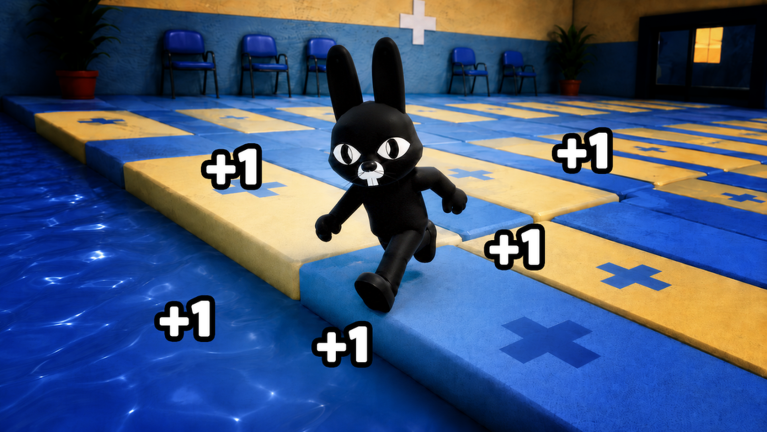
In 1 Speed Animal Hospital Escape, every step you take adds +1 Speed to your character. Whether you play alone or in a group, understanding how to maximize that incremental gain is the key to escaping the hospital. This guide breaks down the best strategies for solo runners and squad players, using specific mechanics and routes from the game.
Solo vs Group Play: Core Differences
When playing solo, you have full control over your path and pacing. Every step is yours, and you can focus entirely on building Speed without coordinating with others. In a group, steps are shared across the team, meaning the total Speed gain per second can be higher if everyone moves together efficiently. However, group play introduces challenges like route conflicts and differing skill levels. The official game description states that every step gives +1 Speed, so the more steps taken per minute by your team, the faster everyone progresses.
Best Strategies When Playing Alone
Build Speed with a Wide Loop
Start by choosing a reachable goal—like the first checkpoint or a landmark on the escape route. Use a wide walking loop that covers multiple rooms. For example, circle the reception area and hallway near the entrance. This keeps you moving continuously without backtracking. According to the Speed Farming Guide, a wide loop with exact step targets (e.g., 500 steps per loop) helps you measure progress and avoid stagnation.
Practice the Escape Route
Learn the optimal path from the start zone to the exit. The Racing Guide emphasizes practicing the route to create a Speed cushion. As a solo player, you can memorize every turn and obstacle, allowing you to maintain momentum. Use the first few runs to map out the shortest distance, then aim to complete it in as few step deviations as possible.
Time Your Entries
If the game has timed events or doors, plan your approach. For instance, some doors may open only after a certain number of steps or a timer. The Racing Guide advises timing race entries—enter a new section when your Speed is at a peak to blast through checkpoints.
How to Adapt When in a Group
Coordinate Movement Patterns
In a team of two or more, assign a leader to set the pace. Everyone should move in the same direction, following a similar path. Avoid spreading out; instead, stay close so your steps accumulate together. A simple rule: always keep the teammate ahead in sight. This ensures no one wastes steps on dead ends.
Use the Buddy System
Pair up and take routes that mirror each other. For example, one player loops the left corridor while the other loops the right corridor, then swap. This doubles the step count per second without crowding. The Progression Guide suggests turning a large target into smaller measurable walking sessions—in a group, each pair can focus on one segment.
Share Goals and Checkpoints
Communicate your next step target. If one player reaches a checkpoint first, the rest can adjust their route to meet there. The Beginner Guide recommends choosing a reachable goal and learning the escape route. In a group, the route becomes a shared objective. Use the in-game chat or voice to call out shortcuts or obstacles.
Role Suggestions for Team Play
The Pacer
This player sets the speed. They should have the most experience with the map and know the exact step counts between key points. The Pacer leads the team, ensuring everyone stays on track.
The Scout
If the map has multiple paths, a Scout can run ahead to check for blockages or faster loops. They return to the group to report, allowing the team to adjust without wasting steps.
The Sweeper
In larger groups, one player stays at the back to make sure no one falls behind. They can also gather stray steps from areas others missed.
When to Switch Approaches
Solo play is best when you want to practice the route without distractions. Use it to refine your personal best times and memorize step counts. Group play is optimal when you need to complete longer segments quickly—a coordinated team can achieve higher total step rates. If you get stuck on a section solo, try recruiting a friend to double the step generation. Conversely, if your team is disorganized, split into solo runs until everyone knows the path.
Always consider the map layout. Tight corridors favor solo play where precision matters, while open areas allow groups to spread out and cover more ground. The TikTok clip shows the quickest way to grind coins involves focusing on a single efficient loop—this works for both solo and group, but in a group you can alternate loops to keep fresh.
FAQ
Q: What is the best solo build for 1 Speed Animal Hospital Escape?
A: The best solo build focuses on a consistent, wide walking loop with exact step targets. Start in the reception area, loop through the main hallway, and return. Use the first few runs to measure the loop's step count, then repeat. Avoid dead ends and practice the escape route until you can run it blind.
Q: How does group play affect Speed gain in Animal Hospital?
A: In a group, each player's steps contribute to the team's overall Speed progress. If two players walk the same path, they effectively double the step rate. However, coordination is crucial—if players split up, the steps are still counted, but slower routes can reduce efficiency. Stick together and communicate.
Q: Is it better to play solo or with friends in 1 Speed Animal Hospital Escape?
A: It depends on your goal. Solo is ideal for practicing and achieving a personal best. Group play is better for completing large step targets quickly because multiple players generate steps simultaneously. If your team is experienced, groups can unlock exits faster. For beginners, solo allows you to learn at your own pace.
Conclusion
Mastering 1 Speed Animal Hospital Escape requires understanding how to maximize every step you take. Whether you play alone or with a squad, the core principle remains: move intentionally and keep momentum. Solo players benefit from deep route knowledge and consistent loops. Teams thrive on coordination and role assignment. As of July 2026, these strategies remain effective. Choose the approach that fits your play style, and remember—every step counts toward your escape.
Active 1 Speed Animal Hospital Escape Codes (July 2026)
No verified active codes are available right now for 1 Speed Animal Hospital Escape.