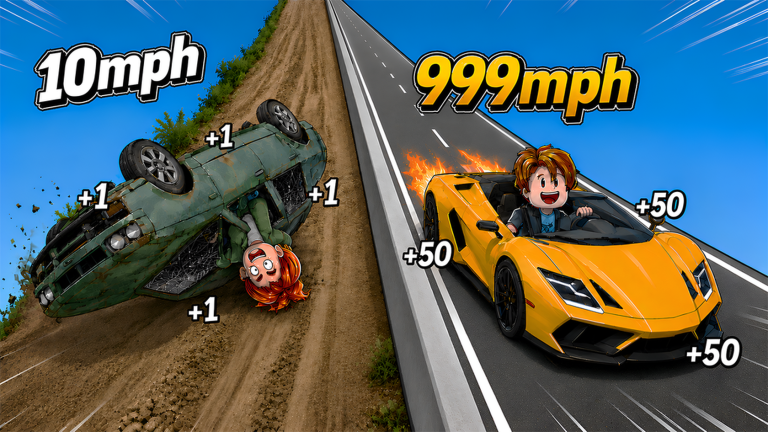
1 Speed Per Click is a Roblox racing simulator where every click builds speed, speed wins races, races pay cash, and cash buys cars. The real decision in November 2026 is not whether to upgrade, it is which of the three core stats you stack first, which route you run with that stack, and which of your owned cars you pair with it. Get that combination right and you multiply earnings. Get it wrong and you burn a session of cash on a car that never wins.
Comparing the Three Loadout Cores
Every build in 1 Speed Per Click is really a question of which stat carries your race results.
- Engine First: Pushes top speed, the stat that directly shrinks race completion time. This is the loadout that scales hardest, because shorter completion times raise both race payouts and the passive earnings you collect while away.
- Tires First: Pushes handling, which protects your speed through tight corners. This loadout pays off on curvy city circuits where a high top speed car bleeds time on turn-in.
- Acceleration First: Improves how quickly you reach your top speed. Useful on short races with frequent stops or restarts, but it contributes less over a full lap than sustained speed does.
The engine build is the default for most players because top speed multiplies every other cash source. The tires build is the specialist answer for technical tracks. The acceleration build is the niche option, and most players who rush it early end up regretting the cash.
When Each Loadout Works Best
Engine Build: Straightaway Tracks and Long Races
Straightaway-heavy tracks reward raw top speed, so an engine-focused build belongs here. The same logic applies to race length: early on, shorter races tend to outperform longer ones because you finish more of them and reinvest earnings sooner. Once your engine upgrades push your top speed higher, the completion gap that made short races profitable shrinks, and longer, higher-reward races become the better cash per hour play. That pivot is the single biggest economy shift in 1 Speed Per Click, and it only happens if you invested in the engine first.
Tires Build: Technical Circuits
Technical circuits with tight corners punish builds that only chase top speed. Tires turn a fast car into a fast car that actually holds its speed through turn-in. Run the tires loadout on these tracks and compare lap times against your engine build on the same circuit. If the handling build posts a cleaner lap, keep it as your dedicated technical track car and save your engine build for the straights.
Acceleration Build: Short Sprints Only
Acceleration matters most when you are constantly restarting speed, such as short sprint-style races where you never hold top speed for long. On a full lap, sustained top speed and cornering dominate, so acceleration should come after engine and tires are covered. Treat it as a third-slot upgrade, not an opener.
Game-Specific Examples and Tricks
Idle earnings reward upgrade timing. Earnings continue while you are away and scale with your car speed. That makes the last upgrade before logging off the highest value purchase of your session: buy a speed or engine upgrade first, then quit, and the entire offline window runs at the higher rate.
Rotate your exclusive vehicle collection by track. Keep separate cars for straightaway-heavy tracks and technical circuits instead of forcing one vehicle into every race. Straight tracks get your highest top speed car, technical tracks get your handling car, and both stay ready without re-testing between runs.
Use squad time trials as experiments. Group play shines when you run private races on identical tracks with matched car classes, then split upgrade testing: one teammate stacks engine, one stacks tires, one stacks acceleration, and you compare lap times afterward. That produces a verified upgrade priority list without anyone wasting cash on a dead end. It also answers the question solo grinding takes hours to answer, namely which car actually wins on your usual route.
Share routes, guard spending. When a teammate finds a high-reward race route, circulating it raises everyone's earnings instantly. Counter that with a spending rule agreed before the session: no impulse car purchases, only upgrades that survived a solo test or a group benchmark. Leaderboard climbing is where squads separate, because rank pressure forces cleaner runs and tighter upgrade discipline.
FAQ
Q: Should I upgrade engine, tires, or acceleration first in 1 Speed Per Click?
Engine first for most players, because top speed shortens race completion time and raises both race payouts and idle earnings. Add tires next for tracks with tight corners, then acceleration as a third-slot upgrade once the first two are covered.
Q: When should I switch from short races to longer races?
Switch once your engine upgrades make your top speed high enough that the completion time gap on short races stops being profitable. As your car gets faster, longer races pay more per hour because your improved speed closes the completion gap that made short events better early on.
Q: What is the best use of squad play in 1 Speed Per Click?
Controlled comparisons. Run private races on the same track with matched car classes while teammates test different upgrades, then compare lap times. Squad members also share route knowledge and push leaderboard runs, which is where coordinated play beats solo grinding.
Conclusion
The strongest approach in 1 Speed Per Click in November 2026 is a paired garage, not a single favorite car. Run an engine build on straightaway tracks and long races, keep a tires build for technical circuits, delay acceleration until those two are solid, and buy your biggest speed upgrade right before you log off so idle earnings run at the higher rate. Test car and upgrade choices solo for clean data, then use squad time trials to confirm what solo play only suggests. Do that and every click, race, and purchase works toward the same goal: faster cars that pay for themselves.
Active 1 Speed Per Click Codes (November 2026)
No verified active codes yet for 1 Speed Per Click; 9 unverified codes are being tracked.