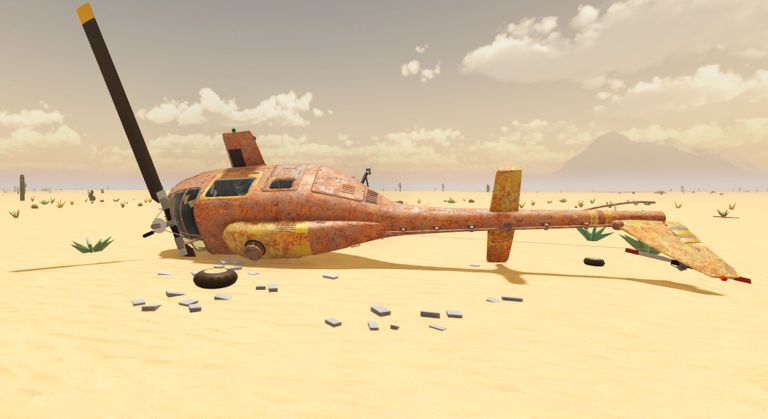
Why Solo and Squad Play Feel Like Different Games
A Long Flight is still in early access, which means the flight loop is stable enough to plan around but flexible enough that your approach matters more than any single fixed route. The biggest mistake players make is copying their solo habits into a group session, or vice versa. In a solo run you own every decision: when to climb, when to descend, when to gamble on a longer leg, and how much reserve you are willing to hold at the end of a run. In a squad, those same decisions are shared, and the player who hoards the information or the fuel burns the whole team's time.
This guide breaks down the two play styles, what each one rewards, and the exact moments where you should swap between them rather than stubbornly sticking to one.
Where Solo and Group Approaches Diverge
The core difference is decision latency. Alone, your correction loop is instant: you notice fuel trending low, you adjust altitude, you shorten the next leg, and you recover within seconds. In a group, that same correction has to travel through voice or pings, and by the time everyone agrees the situation has already changed.
- Fuel discipline: Solo players can afford aggressive burns because there is no one else to bail them out. Squad players need a shared reserve rule that everyone follows without negotiation mid-run.
- Route risk: A solo player can take a risky shortcut because only one run is lost. A squad multiplies the cost of a failed shortcut across every member.
- Information flow: Alone, you carry all knowledge in your head. In a group, unreported hazards become the number one cause of a wasted attempt.
- Pacing: Solo runs punish hesitation. Group runs punish anyone who moves faster than the group can support.
Best Strategies When You Are Playing Alone
1. Pick one rhythm and hold it. Solo play rewards consistency over cleverness. Choose a climb, cruise, and descent pattern you can repeat every run, then only deviate when your fuel readout forces you to. Chopping and changing your rhythm run to run makes it impossible to tell whether a failure was bad luck or bad habit.
2. Treat your reserve as a hard floor, not a target. The moment fuel stops being a comfortable buffer and starts being the thing you finish with, your run is already compromised. Set a personal floor, and never let a tempting longer leg talk you through it.
3. Bank small gains instead of chasing big ones. A long stretch that saves minutes but leaves you thin on fuel is a losing trade, because the recovery from running dry costs far more than the stretch ever saved. Short, repeatable legs compound better over a session.
4. Review immediately, not later. When you fail alone, the details fade fast. Take ten seconds right after a failed run to name the exact decision that went wrong before queuing again.
How to Adapt When You Are in a Group
Group play is less about individual skill and more about shared state. The squad that wins is usually the one where everyone knows the fuel picture, the plan for the next leg, and the fallback if it fails.
- Agree the reserve rule before takeoff. Do not negotiate fuel policy at the worst possible moment, thirty seconds from a dry tank.
- Call out before you act. A solo-style split from the pack without a callout reads as an error to everyone else, even if it was intentional.
- Match the slowest member deliberately. If one player is consistently behind, either slow the plan or change their job. A squad that splits in half is really two failing solo runs.
- Keep one person as the navigator. When everyone is flying and nobody is watching the plan, the group drifts.
Suggested Role Split for Team Play
You do not need formal roles, but assigning these informally prevents overlap:
- Lead flyer: Sets pace, calls the next leg, and is the only one allowed to change the plan mid-run.
- Fuel monitor: Watches the reserve across the group and has authority to veto any leg that pushes the team past the agreed floor.
- Route scout: Tests risky options first so the rest of the squad can commit with full information.
- Anchor: Flies the conservative line and exists purely so that a failed gamble does not end the whole session.
When You Should Switch Approaches
Sticking to one style out of stubbornness is the most common way sessions go bad. Switch when:
- You have failed the same leg twice in a row solo, which usually means the plan is wrong rather than your execution.
- Your squad has lost two members and is now effectively undermanned, so the solo reserve rule becomes safer than the group one.
- You are learning a new stretch and need the full attention budget that only solo play gives you.
- The group is smooth and communicating well, which is exactly when squad play outperforms any individual effort.
FAQ
Q: Should I play solo first before joining a squad in A Long Flight [EARLY ACCESS]?
Yes. Solo play forces you to own fuel decisions and correction timing that you would otherwise lean on teammates for. Learn the basics alone, then bring that discipline into a group instead of arriving with none.
Q: What usually causes group runs to fail in A Long Flight [EARLY ACCESS]?
Unshared state. Fuel levels, plan changes, and split decisions that are never called out are what collapse squad runs, not raw mechanical skill.
Q: Is one approach clearly better for progression?
Neither is dominant. Solo play gives cleaner learning and full control, while squad play lets you commit to risks that a single player cannot safely take. Match the approach to the current goal.
Conclusion
The players who progress fastest in A Long Flight [EARLY ACCESS] are not the ones with the flashiest flying. They are the ones who know which mode they are in. Play solo to build the fuel discipline and correction habits, play grouped to multiply what you have learned, and switch between the two the moment the situation demands it. Early access means the details will keep shifting, but this solo versus squad framework will keep working regardless of how the game evolves.
Active A Long Flight [EARLY ACCESS Codes (October 2026)
No verified active codes are available right now for A Long Flight [EARLY ACCESS.