Why Speed Loses and Setup Wins in Low Range: Offroad 4x4
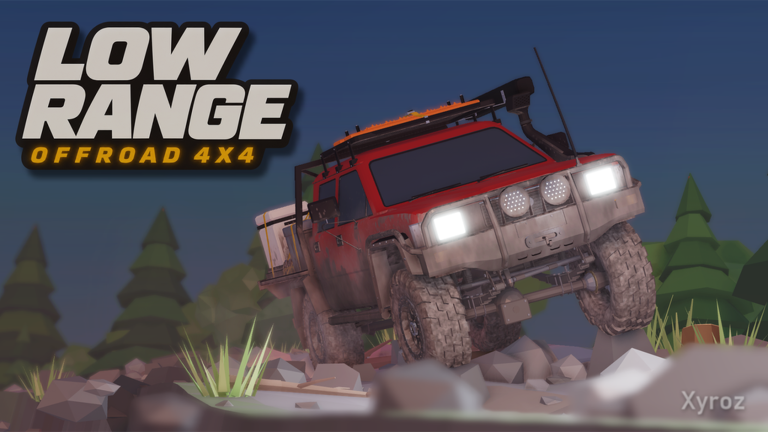
Low Range: Offroad 4x4, built by MTBAce Studios and currently in early access, is deliberately slow. The official Roblox page describes it as a slow, technical offroad driving game where each stage is one trail from start to finish, inspired by real offroad tracks around the world. The developer's line is blunt: speed won't get you through. Reading the ground and setting up your truck will.
That framing changes how you should think about optimization. You are not shaving milliseconds off a racing line. You are making a series of decisions about surface, traction and vehicle systems before each obstacle arrives. The tips below are drawn from the official game description, the developer guide site, and beginner and pro walkthrough videos posted in November 2026.
The Strongest Advanced Tips: Read First, Then Commit
The core advanced habit is looking ahead of your wheels. Identify the surface of the next obstacle before you reach it, then decide whether that line looks better than another visible route. The developer names four terrain types that each change how your truck grips and climbs: mud, roots, rock and water. Each one demands a different decision.
- Rock sections: beginner guidance from the Radex Tips channel is explicit. Do not just accelerate as hard as possible and hope for the best. Slow down, watch where you are driving, and drop into the appropriate low range setting.
- Water crossings: keep the vehicle in low range and enter slowly. There is no need to rush, because careful driving gives you more control over what the truck is doing.
- Steep and technical ground: the pro walkthrough from MySpaceGuide recommends dropping into low range the moment the trail gets steep or technical, not after you have already lost momentum.
- Speed discipline: treat every obstacle as a decision, not a race. Paying attention to your speed instead of attacking each obstacle flat out is the single most repeated piece of advice across both community videos.
Efficient Truck Setups: Airing Down, Diff Lock and Low Range
The official page and both video guides agree on a setup order. Run it before the hard part of any stage:
- Air down your tires for better contact with the ground. Lower pressure increases the contact patch, which is what keeps roots and slick mud from spinning you out.
- Lock the diffs so power reaches the wheels that actually need it. The beginner guide gives the exact input: press K to activate the lockers when your wheels get stuck on an obstacle, and the lockers improve traction immediately.
- Drop into low range as soon as the trail turns steep, rocky or technical.
Sequence matters. Locking diffs and dropping into low range after you have already buried the truck is recovery mode, not optimization. The efficient player sets up before the obstacle, then uses the systems once, cleanly.
Hidden Mechanics: Mud That Remembers and Fuel That Punishes
The shared rut system
The most important hidden system in Low Range: Offroad 4x4 is server-wide persistence. The developer calls it mud that remembers: ruts get deeper with every truck that passes, for everyone on the server. The line you choose now affects the next driver.
This has two strategic consequences. First, an easy-looking shallow crossing may be noticeably worse after many players have run it, so never assume a route stays the same between visits. Second, your rut choices carry a social cost. Cutting a fresh line protects the trail for the next player; repeatedly reusing the same groove deepens it for everyone. Advanced players weigh this when they compare two routes on a repeat run.
Fuel caches as checkpoints
Fuel is a real constraint. Four-wheel drive burns more fuel, and the official description confirms that fuel caches on the trail fill your tank and act as checkpoints. Plan your route around them rather than treating fuel as a background worry. When you are comparing fuel use between two routes or two runs, keep your driving configuration and game state the same, otherwise a difference in fuel burn may have several explanations and tell you nothing useful.
The winch as a time saver
If your truck gets stuck, do not sit there spinning tires deeper. Hook a tree or a friend's truck with the winch and pull yourself free. The winch converts a potential reset into a few seconds of progress, which is why it belongs in your routine toolkit and not just your emergency kit.
Practical Strategy Examples
Rocky climb entry
Approach at walking pace, select low range before the first rock, and wait for the wheels to seat. If a wheel climbs an obstacle and hangs, press K for the diff lockers instead of adding throttle. Throttle digs; lockers free.
Water crossing on a busy server
Enter in low range, slowly, and choose a line that does not already contain deep ruts. On a populated server the crossing you pick is a shared resource, and the shallow path from earlier may no longer be shallow.
Stuck in deep mud mid-stage
Stop throttle input first, then winch to a tree or a friend's truck. Reapply the full setup: tires aired down, diffs locked, low range engaged. Then continue to the next fuel cache, which doubles as your progress checkpoint for the stage.
Solo versus team runs
You can drive solo or team up with friends to help each other through the hard sections, then come back to beat your best times. A teammate with a winch line is the fastest recovery tool in the game, and repeated attempts let you convert learned lines into personal bests on each stage.
Frequently Asked Questions
Q: How does the shared mud rut system work in Low Range: Offroad 4x4?
Ruts deepen with every truck that passes, and the change applies to everyone on the server. A line that was easy early in the session can become a deep groove later, so recheck surfaces instead of assuming your old route still works.
Q: When should I press K for differential lockers?
Press K when your wheels get stuck on an obstacle such as a rock or root, so power reaches the wheels that need it. Use it as a traction correction, not a constant state, and combine it with low range rather than extra throttle.
Q: How do fuel caches work as checkpoints?
Four-wheel drive burns more fuel, and caches along the trail refill your tank while marking progress. Plan your route to reach the next cache before your fuel gets critical, and keep your setup consistent when you compare fuel use between runs.
Conclusion
Low Range: Offroad 4x4 rewards players who treat each stage as a chain of reading decisions: identify mud, roots, rock or water, air down the tires, lock the diffs with K, drop into low range, and winch out instead of digging in. Respect the mud that remembers, treat fuel caches as checkpoints, and remember that speed is what loses trails. Set up first, drive slow, and the best times follow.
Active Low Range: Offroad 4x4 Codes (November 2026)
No verified active codes are available right now for Low Range: Offroad 4x4.