Why your time budget matters more than any leaderboard
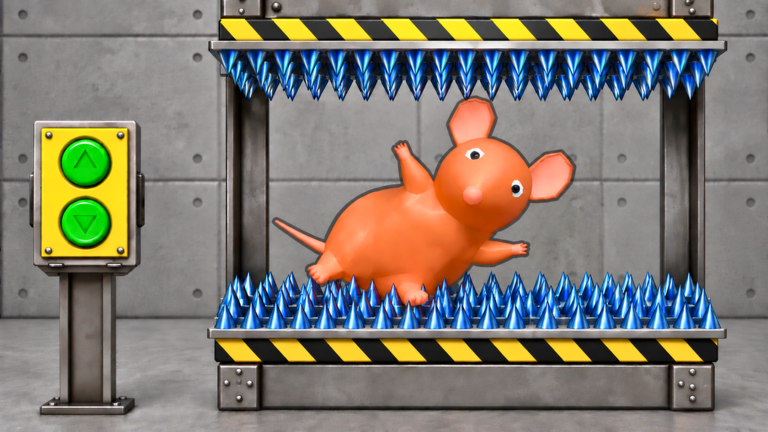
Rat Lab is a Roblox title where many rats escape and the whole lab fills with monsters, and the version most people are playing right now is the demo. The official demo guide on ratlab.top walks through what that demo actually offers, how each of the three roles plays, and the practical habits that separate new players from the ones who look like they already know the map. If you treat Rat Lab like a grind, you will burn out before the full release. If you treat it like an economy, where every session is a deposit of attention that either compounds or evaporates, you will walk into the complete game with something most players will not have: knowledge that was paid for cheap.
This guide reframes Rat Lab through that lens: what you earn, what you spend, what actually holds value between sessions, and what quietly drains you.
How the Rat Lab economy actually works
There is no verified player marketplace described anywhere in the material we have on the demo. What the demo guide does describe is allocation: three roles, one lab, and a set of practical habits. That makes Rat Lab a time economy. Your currency is attention, your deposits are runs, and your withdrawal is transferable skill.
Each of the three roles is a different cost structure. One role will let you learn the lab layout while staying relatively safe, another puts you directly in the path of the monsters, and the third changes how you relate to the other players. The mistake new players make is picking one role, learning only that role's surface habits, and assuming they have learned the game. The guide is explicit that the point of the demo is to walk through all three.
There is also an important market signal in the Roblox DevForum thread where the developer asks for feedback and states that basically everything can be improved. That tells you the current balance is provisional. Anything you over-invest in right now can be re-tuned, so invest in fundamentals rather than in one specific dominant habit.
Best earning and farming methods
Rotate roles instead of grinding one
The single highest return activity in Rat Lab right now is deliberate role rotation. Run each of the three roles until you can predict what the other two are doing without seeing them. That cross-role awareness is what the demo guide calls the habit line between new and experienced players, and it costs nothing but time.
Farm the rat escape windows
Rat escape moments are when the lab turns into chaos and monsters flood the space. Those windows are your most information-dense farming opportunities: you see monster pathing, you see how players panic, and you see which routes stay open when everything goes wrong. Play footage of escapes and note which corridors never get crowded.
Learn monsters by class, not by sighting
Rat Lab is described as a game full of monsters, so the real knowledge asset is pattern recognition. Keep a simple mental catalog: which monsters commit to a chase, which ones cut you off, and which ones only matter when the rats are loose.
Trading strategies and market timing
In an economy without a marketplace, trades happen between players, not menus. Duo rat tactics are the clearest example: pairing your role with a partner who covers your blind spot converts a solo run into a coordinated one. Duo setups are where the leverage is, because a well-matched pair extracts more per run than two players running the same role independently.
Timing matters too. Because the developer is actively soliciting changes, hold your mastery lightly between patches. If a new version lands, re-check your assumptions about each role before spending a session re-enforcing a habit that may already be obsolete.
What actually holds or gains value
- Cross-role literacy: knowledge of all three roles survives every balance change, because the roles still exist even when their numbers move.
- Escape route memory: corridors that stay open during rat escapes are stable assets. Monster behavior shifts, geometry does not.
- Duo coordination: a practiced pairing is worth more than two individual skill sets, since timing and coverage compound.
- Pattern recognition over memorized sequences: with everything improvable, generalized reads beat one fixed solution.
Common pitfalls and traps to avoid
- Role tunnel vision: mastering one of three roles means you are missing two thirds of the demo's actual teaching.
- Treating the demo as final: the developer's own feedback request warns that everything is subject to change.
- Ignoring escape chaos: skipping the moments when rats break loose is skipping the game's best practice material.
- Playing solo when duo tactics exist: unpaired runs leave coverage gaps that coordinated pairs exploit.
- Copying habits without context: a habit that works in one role can actively hurt you in another.
FAQ
Q: How many roles does the Rat Lab demo give me to learn?
Three. The official demo guide covers each of the three roles and the practical habits that separate new players from experienced ones, so the intended path is to cycle through all of them rather than settle on one.
Q: When do the monsters become the biggest threat in a Rat Lab run?
During rat escape events, when many rats break loose at once and monsters flood the lab. That is when routes get crowded, so knowing which corridors stay open matters more than raw speed.
Q: Should I perfect my current playstyle before Rat Lab changes?
No. In the Roblox DevForum feedback thread the developer notes that basically everything can be improved, so generalized reads and cross-role literacy hold their value far better than one narrow, possibly temporary habit.
Conclusion
The smartest Rat Lab player in October 2026 is not the one with the most runs, but the one who spent those runs correctly. Rotate all three roles, farm the rat escape windows for information, build at least one reliable duo pairing, and keep your knowledge flexible while the developer is still reworking the demo. That is an economy you can win before the full game even launches.
Active Rat Lab Codes (October 2026)
No verified active codes are available right now for Rat Lab.