Intro: A Live-Service Soccer Sim Measured on Retention
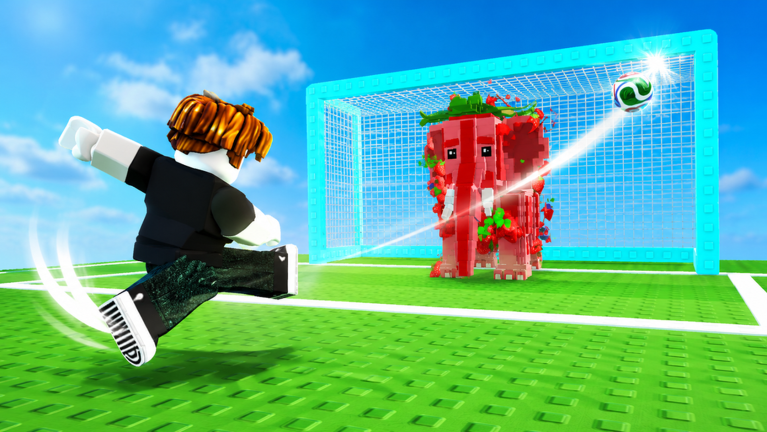
Score Goals for Brainrots arrived from Rope Swing Studios in April 2026 with a simple pitch: score goals, earn money, collect Brainrots, repeat. Months later the real question is not whether the first five minutes are fun, they are, but whether the progression curve and content loop actually hold a player past the first rebirth. This September 2026 review judges the game on exactly that, the systems that decide retention: the stadium ladder, the rebirth economy, the promised hourly events, and the pressure the shop applies along the way.
The Core Gameplay Loop
Everything starts with shooting. You aim, you score, the money counter climbs, and you spend that money on upgrades that raise your kicking power. Each Brainrot you add to your collection contributes passive income and a visible stat bump, so the collection is not cosmetic, it is the engine. Money buys access to higher stadiums, ten tiers in total, and better tiers demand better numbers rather than better aim.
Two systems sit on top of that foundation. The first is offline earnings, which lets your Brainrots keep producing while you are away, so short sessions still move the meter. The second is the rebirth reset, which wipes run progress in exchange for permanent multipliers. The combination machine, a community discovered feature, lets you merge Brainrots for stronger results, which turns the collection into a puzzle instead of a checklist. Hourly events, billed in the game description as wild modifiers that shake up the field, are the wildcard layer meant to break the repetition of the standard shooting rhythm.
Strengths
The rebirth design is the standout. Because multipliers stack permanently and apply to every future run, resetting never feels like punishment, it feels like an investment. Each loop after the first is faster and richer, which is exactly the shape a retention focused game needs.
The collection also has genuine depth. With more than 120 Brainrots, each carrying its own personality and income contribution, plus manual leveling and rarity tiers, there is always a concrete next target. Pair that with ten stadium milestones and a global leaderboard tracking goals and rebirths, and the game constantly supplies short, achievable goals.
Update cadence has been steady since launch, with patches landing in May and a team that keeps highlighting the hourly events as a core pillar. The game has also kept a healthy player base and strong approval rating well past its launch window, which suggests the loop is doing its job.
Weak Points
The first weakness is transparency. Public patch notes are thin, so the actual content of the hourly events is hard to pin down from outside the game. If those events rotate often with meaningful modifiers, they solve the monotony problem. If they amount to short boost windows, long sessions will still feel repetitive.
The second weakness is how the challenge scales. Against the top stadiums the test shifts from shooting skill to raw stat checks, so the experience becomes a numbers race. That is fine for grinders, but players who came for soccer mechanics will feel the skill element fade.
Finally, community features are limited. The leaderboard is a good start, but there is little built in for coordinating sessions or competing with friends beyond raw stat comparison.
Progression and Monetization
Progression is earned through three channels: grinding goals, letting offline income accumulate, and rebirthing at the right moment. The curve is moderate, and it smooths further after each reset because rewards compound.
Monetization runs through Robux purchases for powerful Soccer Balls and direct upgrades. These provide a clear head start, especially early, but they do not gate content. A dedicated free player can still clear all ten stadiums and complete several rebirths through play alone, which keeps the game honest. The pressure is real but optional.
Regarding free giveaways, the code system follows the pattern used across this genre. Developers typically announce codes through community channels, usually tied to milestones such as visit counts, likes, or membership goals, and those codes carry a limited lifespan because they are promotional tools rather than permanent features. There are currently none to redeem for Score Goals for Brainrots, and no rewards can be claimed yet. This page is monitored and updates the moment codes drop, so the live list below is the place to check rather than hunting through forums. Once the developer starts distributing them, redemption will follow the standard flow of entering the code through the in-game menu, and expired entries will be marked as they lapse.
Who This Game Suits
Score Goals for Brainrots is built for players who enjoy incremental number growth, collection completion, and visible offline progress. If you like games where the payoff comes from planning when to reset, this is a strong fit. If you want a skill driven soccer experience with tight mechanics, the stat check scaling will disappoint you. It also suits players with fragmented schedules, thanks to offline earnings and short, session friendly loops.
FAQ
Q: How does the rebirth system actually work in Score Goals for Brainrots?
A rebirth resets your run progress and returns you to the start, but grants permanent multipliers that raise your earnings in every subsequent cycle. Because the benefits are cumulative, each rebirth is quicker and more profitable than the last, which makes the decision about when to reset a strategic one rather than a loss.
Q: Are the hourly events worth planning your play sessions around?
They are the main tool the developer uses to break up the standard shooting loop, and their value depends on how often they rotate and what they change. Players who log in frequently should treat them as a bonus layer on top of normal grinding rather than a replacement for it.
Q: Can you finish all ten stadiums in Score Goals for Brainrots without spending Robux?
Yes. Offline earnings, rebirth multipliers, and steady grinding are enough to clear the full stadium ladder. Robux purchases accelerate early progress, but nothing on the ladder is locked behind a purchase.
Verdict
Score Goals for Brainrots is a well built incremental game wearing a soccer skin. Its rebirth economy is fair, its collection has real depth, and its update cadence shows a developer still invested months after launch. The weak spots are the opaque event communication and a late game that leans on stats over skill. For players who want a satisfying, low pressure progression loop with offline progress and a clear long term goal, it is easy to recommend. For anyone seeking a competitive soccer sim, look elsewhere. On balance, it earns a positive verdict for the September 2026 state of the game.
Active Score Goals for Brainrots Codes (September 2026)
No verified active codes yet for Score Goals for Brainrots; 14 unverified codes are being tracked.