Why Solo and Squad Runs Feel Like Different Games
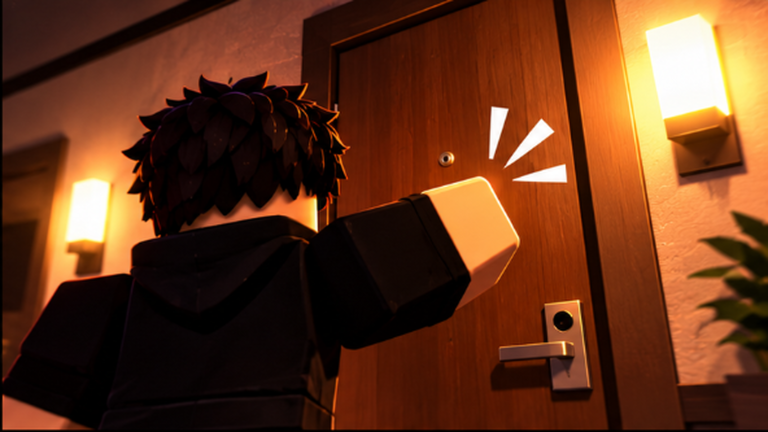
Every run in The Ditch Hotel starts the same way: you knock on a door, someone answers, and the chase is on. From that second forward, your plan has to change depending on whether you are alone or moving with a group. Solo players carry the full pressure of every chaser by themselves, while squad members can split attention, trade aggro and cover each other on the way to the exit.
The core loop never changes. You need to hit your door goal, lose the chasers or hide, and escape down the stairs on the hotel, neighborhood or school map. What does change is how much room for error you have, how fast your Cash gets spent on stamina and closet-hide upgrades, and how you spend limited Pushes when a chaser like BIG EARL or The Gunman is right behind you.
What Actually Differs Between Solo and Group Play
In a solo run, every knock is a commitment. With no teammates nearby, being spotted by Bruiser the Dog means you alone must break line of sight, reach a closet, and wait out the search. Your stamina bar is your only real safety net, which makes Cash from milestones and events far more valuable to a solo player than to a full squad.
In a group run, the danger spreads out. Two players knocking on separate doors can pull chasers in different directions, giving everyone else breathing room to move toward the door goal. The tradeoff is coordination: if two squad members bait the same hallway, you stack chasers on top of each other and lose the advantage you just created.
Best Strategies When Playing Alone
- Bank Cash into stamina first. A solo runner cannot afford to run out of steam halfway to the stairs. Invest early so you can keep distance from Streamer Dad and Military Guy without burning a Push.
- Upgrade closet hiding before anything flashy. Alone, the closet is your only reset. Better closet-hide performance means you can wait out a chaser and re-enter the route instead of restarting your run.
- Save Pushes for the named chasers. Pushes are a limited escape resource. Spend one only when a chaser has already closed the gap on you, not when you still have hallway space to run.
- Sequence your doors deliberately. Hit one door goal at a time and retreat toward the stairs rather than greedy-knocking three doors in a row and dragging every chaser into the same corridor.
How to Adapt When You Are in a Group
Squads should stagger knocks instead of stacking them. While one player draws a chaser toward the neighborhood side of the map, another can quietly work a door goal on the opposite side. Splitting the hotel map this way keeps the number of active chasers per player low, which is exactly where groups beat solo runs.
Communication also changes Push usage. In a squad, call out which chaser is on you before spending a Push, because a teammate nearby may be able to absorb the chase instead. Pushes are far more efficient as a backup plan than as a first reaction when you are grouped.
Role Suggestions for Team Play
- Door Runner: the player with the highest stamina investment, focused purely on reaching the door goal count as fast as possible.
- Aggro Holder: the player who intentionally draws Streamer Dad or Military Guy away from the objective lanes, then hides in a closet to drop the chase.
- Stair Escort: the player who guards the escape route down the stairs so the door runner is not cut off at the finish.
When to Switch Approaches
Switch from aggressive squad knocking to a careful solo-style rotation the moment two or more chasers converge on your group. That is the signal that the map has become too crowded to split up, and everyone should collapse toward the stairs, hide when needed, and finish the remaining door goals one at a time. Conversely, if your squad is clearing rooms cleanly on the school map, push forward and split lanes again to save time.
Frequently Asked Questions
Q: Which chasers should I prioritize avoiding on a solo run in The Ditch Hotel?
Pay the most attention to BIG EARL and The Gunman, since they end chases quickly when you have no teammate to draw them away. Streamer Dad and Military Guy are easier to break by ducking into a closet, while Bruiser the Dog punishes players who linger too long in one hallway.
Q: Do stamina and closet-hide upgrades matter more in solo or squad play?
They matter more in solo play. Without a partner to hold aggro, your stamina keeps you ahead of chasers and your closet-hide level determines whether a single mistake ends the run. In a squad, a teammate can rescue you, so the same Cash stretches further.
Q: Should my group chase every door goal on the hotel map at once?
No. Stacking knocks puts multiple chasers in the same corridor and cancels the advantage of playing together. Split the map, run door goals in sequence, and converge on the stairs once the group starts drawing shared aggro.
Conclusion
The Ditch Hotel rewards whichever play style you commit to. Solo runs are a resource game built on stamina, closet hides and carefully saved Pushes, while squad runs are a positioning game built on split lanes, role coverage and coordinated knocks. Read the chaser pressure on your screen, pick the approach that matches it, and the exit down the stairs gets a lot easier to reach.
Active The Ditch Hotel Codes (November 2026)
2 verified codes available for The Ditch Hotel; 19 unverified codes are being tracked.