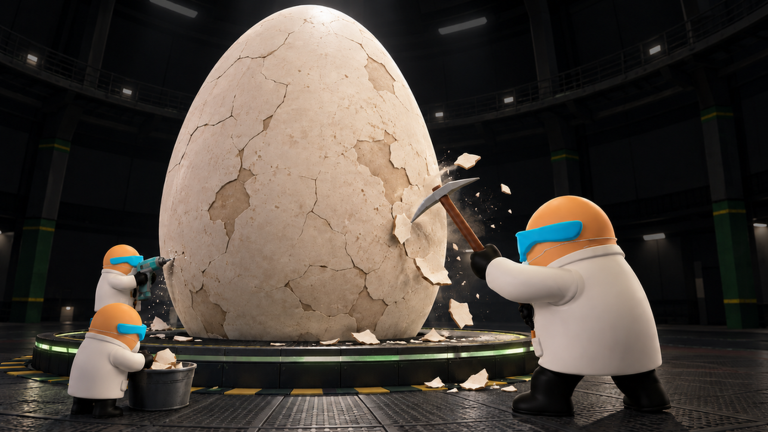
Why hidden mechanics decide your Crack the Egg results
Crack the Egg looks simple on the surface: you pick an egg, you crack it, and you see what you get. That simplicity is exactly what hides the depth. Most players treat every egg the same way, tap through the cracking step without paying attention, and walk away wondering why other players seem to walk away with better hatches far more often.
This guide is built around one idea: the edge in Crack the Egg comes from understanding the systems the game does not spell out for you, and from playing around them deliberately instead of reacting to each egg in isolation. Everything below focuses on hidden mechanics and the smart play patterns that grow out of them.
The lesser known systems inside Crack the Egg
Cracking rhythm is a system, not a flourish
The cracking interaction is the single moment where you have direct input, and it is the one most players rush. Treat the cracking rhythm as a repeatable system: settle into the same pace every time instead of hammering wildly. Consistent pacing gives you a baseline. Once you have a baseline, you can notice when an egg behaves differently, and those differences are where your information lives.
- Keep one cracking rhythm for your first egg of a session so you can compare every egg after it against that standard.
- If an egg takes noticeably longer or shorter to crack than your baseline, treat it as a signal rather than noise and adjust your expectations before you commit more of your resources.
- Never change your rhythm mid egg. A partial change tells you nothing because you no longer have a clean comparison.
Egg selection is a resource decision
Eggs are not interchangeable drops in Crack the Egg. Each pick you make spends something, whether that is time, currency, or a limited attempt. The hidden system here is opportunity cost, and almost nobody calculates it. Before you crack, ask what you are giving up by choosing this egg right now instead of waiting, stacking, or saving.
- Check what you already have in your collection before spending on a duplicate category.
- Decide in advance how many attempts a single egg type deserves before you move on. Pre-set limits stop the emotional spiral of chasing one egg far past the point of reasonable returns.
- Track your results in a simple note. After a few sessions, patterns in which egg choices paid off become visible in a way that memory alone will never show you.
Why these systems matter more than raw luck
Crack the Egg is a game that presents variance as the whole experience, which makes it easy to believe results are entirely random and therefore outside your control. Some of them are. But your inputs still decide two things: how much variance you expose yourself to, and how efficiently you convert the runs that do pay off.
Smart play shrinks the downside. When you pace your cracking, pre-limit your attempts on any one egg type, and log outcomes, you stop bleeding resources on runs that were never going to reward you. That is not luck manipulation. It is damage control, and over a long session damage control is the difference between a strong account and a stalled one.
How to use these mechanics in a real session
Run your Crack the Egg sessions with a structure instead of a mood:
- Open with a warmup egg. Spend a low value attempt first purely to set your cracking baseline and read how the session feels.
- Batch your attempts. Instead of trickling attempts across the whole day, group them. Batching makes results comparable, and comparable results are the only kind you can learn from.
- Rotate egg choices. When one egg type stops returning anything useful, move to another instead of leaning on it out of stubbornness.
- Close with a review. Write down what you spent, what you got, and which egg choices were worth repeating. Two minutes of review outperforms hours of untracked play.
Common mistakes that quietly ruin Crack the Egg runs
Cracking on autopilot. If you are not paying attention to the cracking step, you lose the only feedback loop the game gives you in real time.
Chasing a single egg type. Doubling down after a dry streak feels productive, but it usually just accelerates your resource drain while the odds stay exactly where they were.
Ignoring duplicates. Players treat a duplicate as a failure and mentally check out, which means they also miss the moment the session has actually turned in their favor.
Playing without limits. The most expensive mistake in Crack the Egg is the one you make in the tenth minute because you never decided where the ninth minute would end.
FAQ
Q: What is the most overlooked mechanic in Crack the Egg?
The cracking interaction itself. Players treat it as a formality, but consistent cracking rhythm is what lets you spot when an egg behaves differently from your baseline, which is the earliest signal you get before the result is revealed.
Q: Should I keep spending on one egg type after a long dry streak?
No. Set a fixed attempt limit for each egg type before you start playing. When that limit is hit, rotate to a different egg. A dry streak tells you your resources are better spent elsewhere, not that the next attempt will break the pattern.
Q: How do I know whether a Crack the Egg session actually went well?
Track it. Log attempts, egg choices, and results per session. Without written records you rely on memory, which tends to remember the single great hatch and forget the dozen attempts that produced nothing.
Conclusion
Crack the Egg rewards players who notice what the game does not announce. Treat cracking rhythm as a measurement tool, treat egg selection as a resource decision with a hard limit, and treat every session as data you will review later. That is the whole edge, and almost no one bothers to build it. Start with one structured session this week, log the results, and the hidden patterns in your own play will become the strategy.
Active Crack the Egg Codes (October 2026)
No verified active codes are available right now for Crack the Egg.