Why the Real Game Happens Between the Notes
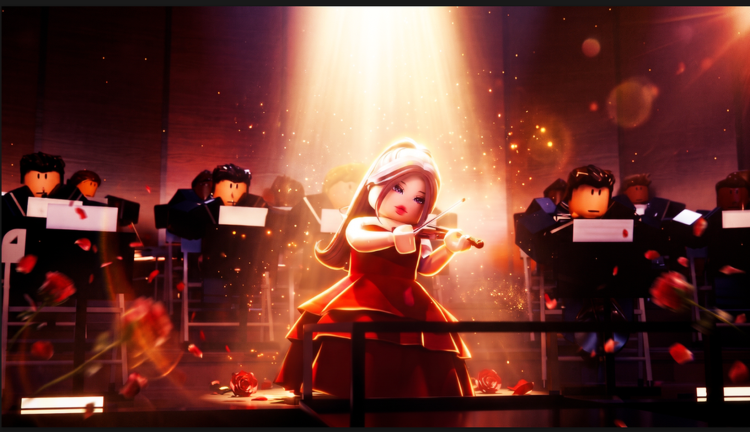
Symphony Orchestra Simulator, the Music and Rhythm experience from developer merpug01 that launched on 21 October 2026, looks like a simple concert on the surface. You pick one of 16 instruments, take your seat in the concert hall, and play along. The depth sits in the systems most players ignore: the spotlight solo rolls, the rose and tomato audience votes, the song selection vote, and the coin economy that gates solo entries. Server sizes cap at 35 players, so every hidden interaction you master directly shifts your odds against a small, visible field of rivals.
The Hidden Systems Most Players Never Notice
Spotlight solos are a roll, not a reward for skill
Any player in the hall can be picked for a solo, and the crowd then votes roses or tomatoes on the performance. That means your seat quality and your visibility in the hall matter as much as your timing. Players clustered near the front or in visually prominent instrument seats are far easier for the spotlight system to highlight, while players buried in the back of a 35 player server are rarely the center of attention.
Coins fund solo entries, not cosmetics alone
Coins are earned during play and spent to unlock solo entries. This is the single most important hidden economy in the game. Every song you survive without spending builds a bankroll for the moment a spotlight opportunity opens. Treating coins as a spend-on-sight resource is the fastest way to run dry before a good solo window arrives.
The next song is a vote, and the playlist is small
The crowd votes on the next piece, with tracks such as Ode to Joy and Swan Lake in rotation. Because the song list is limited and shared, a coordinated vote can push a piece your instrument plays well. Fast, rhythmically dense tracks favor instruments with quick note patterns, while slower, sustained pieces reward long tone instruments like the flute or harp.
Seat retention is the quietest advantage
You keep your seat from song to song. Players who understand this never chase a new instrument mid set. Claiming your preferred instrument once and holding it means your muscle memory, your visibility spot, and your solo readiness all stay stable while everyone else reshuffles.
Why These Systems Matter More Than Raw Timing
The fan wiki community ranks instruments on a tier list specifically for solos, visibility, and fun, which proves the community already treats seat choice as a strategic variable rather than a cosmetic one. A high visibility seat with strong solo potential will outperform a technically perfect performance from an unnoticed seat. Meanwhile, bloxarchive's independent code tracker confirmed that as of 22 November 2026 the game has no external boosters in play, so your standing comes entirely from in-run decisions: which seat you hold, when you bank coins, and how you steer the song vote.
How to Actually Use These Mechanics
- Claim early, hold forever. On joining the hall, immediately claim your preferred instrument from the 16 available and keep it across every song. Reshuffling loses your established spotlight position.
- Bank coins through dead songs. During songs where you are unlikely to be picked, earn and hoard coins instead of spending. Save your balance for a solo entry window on a piece you know well.
- Steer the song vote toward your instrument. Track the rotation between Ode to Joy, Swan Lake, and the rest of the list. Push votes toward pieces where your instrument's pattern is strongest.
- Position for visibility. Choose seats that sit in clear sightlines of the spotlight. Visibility drives whether the crowd ever sees your performance to vote on.
- Read the room before spending. If roses are flowing for a particular instrument type, mirror that seat on your next entry rather than fighting the crowd's taste.
Common Mistakes That Quietly Cost You Solos
- Changing instruments every song. Seat retention exists for a reason. Constant swapping resets your visibility and wastes the coin investment you made to reach a good seat.
- Spending coins on the first solo prompt. Solo entries cost coins, and dumping your balance on a low-visibility song leaves you empty when the spotlight actually matters.
- Ignoring the song vote. Letting the crowd pick blindly means you play pieces that do not suit your instrument, which tanks your solo scoring when the spotlight lands on you.
- Trusting third party tools. Community hub warnings are explicit: third party scripts and tools can put your account at risk. Everything above works inside the game's own systems.
Frequently Asked Questions
Q: Can any player in Symphony Orchestra Simulator be picked for a spotlight solo?
Yes. Any player can be picked for a solo regardless of instrument, and the audience then votes with roses or tomatoes. This is why seat visibility and coin reserves matter more than assuming only top performers get seen.
Q: What are coins actually used for in Symphony Orchestra Simulator?
Coins are earned during play and used to unlock solo entries. They are the gate between sitting in the audience and performing under the spotlight, so banking them across ordinary songs is the core economy loop.
Q: Does my instrument choice carry over between songs?
Yes, you keep your seat song after song. Holding your instrument from the moment you claim it preserves your visibility position and your familiarity with that instrument's note pattern through the full concert set.
Conclusion
Symphony Orchestra Simulator rewards the players who read its systems, not just its rhythm charts. Hold your seat, bank coins for solo entries, steer the song vote toward Ode to Joy or Swan Lake pieces that suit your instrument, and position where the spotlight can actually find you. Do that consistently and the roses, not the tomatoes, will follow you all season.
Active Symphony Orchestra Simulator Codes (November 2026)
No verified active codes are available right now for Symphony Orchestra Simulator.